☕ Support Us
[🇧🇩] - Everything about Hasina's misrule/Laundered Money etc. | Page 2 | PKDefense

[🇧🇩] Everything about Hasina's misrule/Laundered Money etc.

Reply (Scroll)
Press space to scroll through posts
G Bangladesh Defense
[🇧🇩] Everything about Hasina's misrule/Laundered Money etc.
257
7K
More threads by Saif


Awami League: From progressive politics to fascism


1723937385920.png

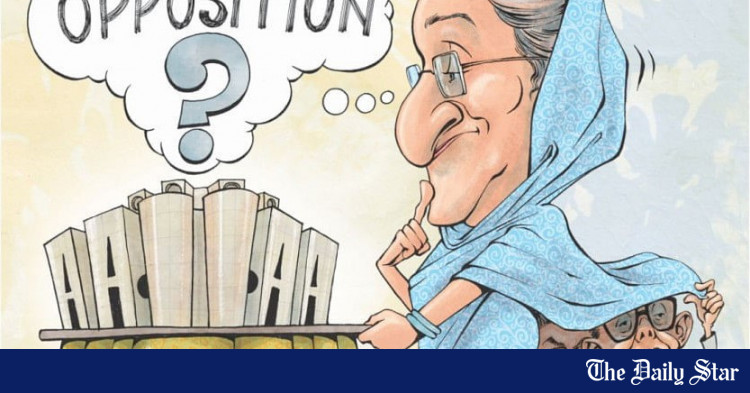
Fast forward to 2024, and one finds that the AL-led 14-party alliance’s rule is being labelled “fascist.” VISUAL: SADATUDDIN AHMED EMIL

August 5 was a historic day for Bangladesh for more reasons than one. The Awami League (AL), the party whose cause was a cornerstone in Bangladesh's history, was ousted by the masses.

Since independence, political turmoil has been part of narratives closely related to Bangladesh. One of the factors which worked in the AL's favour, from the time the party assumed responsibility in 2009, was that it was regarded as the most progressive and liberal party to have gained power following liberation. At that point in time, AL's values struck a chord with the secular middle-class Bangladeshi. The preceding regimes association with elements such as the military, fundamentalism, and state-centric politics aided in this regard.

Fast forward to 2024, and one finds that the AL-led 14-party alliance's rule is being labelled "fascist."

The AL regime has been somewhat of a conundrum. The Perspective Plan of Bangladesh 2041 (PP 2041), which was published in 2020, envisioned to build on economic advancements and enhance the lives of people. The AL accommodated more public-private partnerships within the media world than any other party before and oversaw the widespread introductions of leading social media websites such as Facebook, YouTube, TikTok, and Instagram. Indeed, the regime looked outwards and allowed creative media productions to be released, which did not always comply with the more conservative National Broadcast Policy of 2014. Accordingly, the party is largely responsible for digitalising a new generation of Bangladeshis, many of whom have smartphones and global aspirations today and took to the streets during the recent protests. Student coordinators such as Nahid Islam and Asif Mahmud are surely part of that generation and are, in fact, products of "Digital Bangladesh."

"Digital Bangladesh" was a pillar that supported the party's return to the centre in 2009 and represented its defiance of right-wing politics. AL's reformist approaches resonated with the masses in the context of globalisation and the interrelatedness of international networks in the 21st century. Their alliance with left-wing parties enabled the AL to stay in power and inspire many in the country. But, as it has transpired, the 14-party alliance seems to have paved the way for more dreams than stairs to reach those ambitions.

The recent movement portrayed the angst and frustration of the people from various sectors in Bangladesh, including journalism. The protests that began in the first week of July should be credited for capturing on-the-ground reactions. The mass killings, detentions, disappearances and violence against unarmed protestors that took place during this movement truly called into question the ethos of AL's political mandate. Over 400 people have lost their lives during the quota reform movement between July 16 and August 4, with some claiming that the number may well be understated. It has also been put forward that hospital records have been tampered with and bodies hidden, further putting into question just how many people have sacrificed their lives to bring an end to AL's rule.

Students have always been integral to the political narrative of Bangladesh. The fall of the Ershad regime was not brought about only by workers, but students as well, who endeavoured to take the nation forward on the path of democracy. Students again played their part in 2008 and 2013, when the Shahbagh Protests signalled their support for secular and not communal politics. In 2024, students took a stance once against the fascist practices of the Awami regime.

The tragic reality is that the AL committed to preserving democracy in the country, but backed the said promise by fascist means. The quota reform movement, which eventually led to the AL government's end, stemmed from opposition to fascist practices which often granted AL supporters, activists, and leaders the license to terrorise communities around the country. Throughout its rule, the former ruling party publicly branded opposition parties, such as the Bangladesh Nationalist Party (BNP), and its allies as being fundamentalist and in conflict with the progressive agenda of the party.

While AL's statement may well be true when considering the realities of grassroots politics and the history of BNP and its allies, the Awami League's ideology also correlated with its globalist persuasions. The AL attained success in this sphere and was able to, for a period since 2009, be the flagbearer of the identity of the modern Bangladeshi. But, at present the premise of AL is being questioned and it remains to be seen how that plays out.

In essence, what the masses including the youths of Bangladesh have conveyed through this movement is that they are averse to right-wing politics in general, and both AL and BNP are considered part of that category today. This is very important to consider as we eventually transition to political-administrative rule again. Only time will tell whether progressive politics really do see the light of day in Bangladesh and who will be the leading stakeholders of the future. Meanwhile, the appointment of Nobel laureate Dr Muhammad Yunus as the chief of the interim government seems to be a step in the right direction.

Nihad Nowsher works in business development.​
 

Ex-water resources minister Ramesh Chandra sent to jail
Staff Correspondent 17 August, 2024, 16:02

1723940626742.png

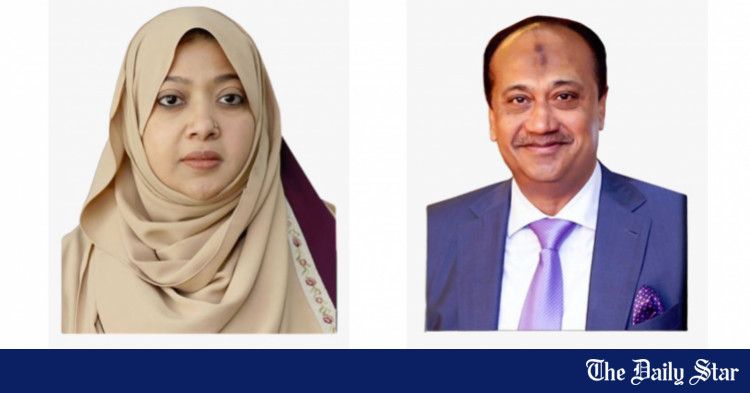
Ramesh Chandra Sen and MA Latif | Collected photo

Former water resources minister Ramesh Chandra Sen was sent to Thakurgaon jail on Saturday under the Explosives Act in a case filed with the Thakurgaon Sadar police station.

Ramsesh, also a former AL lawmaker for Thakurgaon-1, was arrested by a team of police headquarters at his house in Ruhia area of Thakurgaon district and taken into custody at about 11:00pm on Friday.

Thakurgaon district superintendent of police Uttam Prashad Pathak said that they produced him before the court and the court sent him to jail.

Superintendent of the police office issued a statement in this regard saying that he was arrested in a case filed with the Thakurgaon Sadar police station.

Ramesh Chandra Sen is a member of Awami League advisory council. He served as water resources minister from 2009 to 2014.

Ramesh first became lawmaker for Thakurgaon-1 in a by election in 1997 and later he was elected in 2008, 2014, 2018 and 2024.

A Chattogram court, meanwhile, on Saturday placed former Awami League lawmaker from Chattogram 11 MA Latif on three-day remand.

Latif was arrested earlier in the day in a case filed over shooting and injuring protesters during the quota reform student movement.

Chattogram metropolitan magistrate Jewel Deb passed the order this afternoon after the police produced him before the court and sought 10-day remand.

Latif was arrested by the police in the Bayazid Bostami area in the morning and sent to the court.

At about 12:30am he was brought to the court, said Fazlul Quader Patwari, officer-in-charge of the Double Mooring police station.

The arrest was made following the case filed by one Ershad with the police station, he added.

According to the case statement, Latif and 15 named and 100 to 150 unnamed individuals have been accused of opening fire on the protesters that left many people injured on August 4.

On August 10, the former lawmaker was allegedly picked up by the army personnel from his relative’s house in the port city’s Madarbari area, where he was hiding.​
 

AL govt leaves behind $156 billion debt

1724195537765.png


When Sheikh Hasina returned to power in 2008, Bangladesh's total debt was just $33.66 billion. When she fled amid an unprecedented student-led uprising on August 5, she left behind a burden of $156 billion in local and foreign loans for the country to carry.

Converted to the local currency, the country's total debt stood over Tk 18.35 lakh crore as of June 30, according to finance ministry data.

These included $88 billion or over Tk 10.35 lakh crore from domestic sources and the remaining $68.33 billion or nearly Tk 8 lakh crore was external debt.

1724195625610.png


To put in words how the vast debts are affecting Bangladesh's finances: Tk 1.135 lakh crore or 14.02 percent of the total has been kept for interest payment in the proposed budget for this fiscal year, which is the highest among the sectors in the outlay of over Tk 8 lakh crore.

Economists have blamed stagnant revenue growth against a huge rise in expenditure, coupled with corruption in mega projects, for the massive debts.

The government spent around Tk 54 lakh core in total in its three consecutive terms while revenue earnings amounted to just Tk 37 lakh crore. Government expenditure increased from Tk 94,000 crore in FY09 to over Tk 7 lakh crore in the revised budget for FY24.

Bangladesh's revenue-GDP ratio has hovered around 9 percent, one of the lowest rates in the world.

A lack of government initiatives to bring reforms to the National Board of Revenue (NBR), along with tax dodging and huge tax exemptions provided to different pressure groups is blamed for the low revenue collection.

Besides, corruption in different mega projects increasingly made the revenue-expenditure gap bigger, said some leading economists.

Most of the mega projects were riddled with corruption, said Zahid Hussain, a former lead economist at the World Bank's Dhaka office.

"Big Projects, big corruption," he told The Daily Star last night.

He mentioned Bangladesh built the Padma Bridge with its own funds that came from domestic loans while the funds for the Karnaphuli Tunnel and the under-construction Rooppur Nuclear Power Plant have come from foreign sources.

"Corruption happened through cost escalation. Many, many unnecessary layers were added to the projects," he said, citing the Rooppur power project as an example.

Dhaka University economics professor Dr Selim Raihan cited the government's failure to mobilise domestic resources to increase public expenditure as one of the key factors behind the rise in debt.

"The government failed to increase the revenue collection over the past one decade or so," said Selim, who is also the executive director of the South Asian Network on Economic Modeling (SANEM).

The second is corruption in activities surrounding the process of taking loans, especially for mega projects with foreign funds, he said.

"A group with vested interests exploited the foreign loan-based mega projects by massively increasing the costs multiple times."

As a developing nation, Bangladesh has to take loans, but the Hasina government had a tendency to take short-term loans as well as high-interest loans while the focus should have been on low-interest and long-term loans with favourable conditions.

This tendency grew over the years. Loans from single sources increased while borrowing from multilateral sources with more accountability and transparency was minimal.

Bangladesh's debt service-to-revenue ratio is projected to cross the 100 percent mark for the first time owing to rising loans and lower tax and export receipts, highlighting the growing risk to the country's capacity to repay.

The debt service-to-revenue and grants ratio stood at 58.7 percent in FY21 but it surged to 72 percent in FY22 and stood at 71.8 percent in FY23, according to the International Monetary Fund (IMF).

The ratio is projected to grow to 101.1 percent in the current financial year.

Debt service is defined as the sum of interest and amortisation of medium, long, and short-term debt.

"The increasing debt service-to-revenue ratio highlights the urgency of mobilising tax revenue to support much-needed spending to achieve pro-poor, green growth recovery," the IMF said in a report.

The ratio increased as the NBR missed its tax target for the 11th consecutive year in FY23, in the face of slowing growth of collections amidst economic slowdowns and ambitious goals set by the government.

The debt-to-GDP ratio of Bangladesh was forecast to cross 40 percent in the current fiscal year as the government continued to borrow to bankroll its expenditures amid the low collection of revenue.

It was 39.8 percent in FY23 and is forecast to be 41.41 percent at the end of FY24, according to a fiscal monitoring report of the IMF.

In the last decade, the debt-to-GDP ratio rose by 13 percentage points. The IMF forecast that the ratio would reach 43.5 percent in 2028-29.​
 

S Alam, family barred from selling bank shares

1724196241598.png


The Bangladesh Securities and Exchange Commission (BSEC) today barred Mohammed Saiful Alam, founder of Chattogram-based conglomerate S Alam Group, his family members and companies they own from transferring and selling their shares in six banks.

The six are Islami Bank Bangladesh, Social Islami Bank, First Security Islami Bank, Global Islami Bank, Union Bank, and Bangladesh Commerce Bank.

As per the central bank's request, the BSEC sent a letter instructing Dhaka Stock Exchange, Chittagong Stock Exchange, and Central Depository Bangladesh to issue the bar on the sale and transfer of the shares.

The letter lists 56 companies owned by Alam's 25 relatives which have come under the restriction.

The BSEC ordered the intermediaries to abide by the order with immediate effect.

Last week, the National Board of Revenue had asked banks to provide account details of Mohammed Saiful Alam and his family members.​
 

Govt for China loan restructure
Staff Correspondent 21 August, 2024, 00:08

1724198764061.png


Finance and commerce adviser Salehuddin Ahmed on Tuesday said that they had asked China for restructuring its loans given to the immediate past government for development projects on high interest rates and short grace periods.

He made the request for reduced interest rates and increased grace periods for the China-funded projects when Chinese ambassador in Bangladesh Yao Wen paid a courtesy call to the adviser at the finance ministry of the interim government.

‘We want repayment period to be extended by 10 years’, said the finance and commerce adviser of the interim government led by Nobel laureate professor Muhammad Yunus since prime pinister Sheikh Hasina was ousted from power on August 5 amid mass uprising.

The Chinese ambassador admitted that they received some requests and wishes during the meeting, and without elaborating what they were he said that there were scopes for discussion on the issues.

The Chinese ambassador highlighted that the relation between Bangladesh and China was based on mutual respect as well as benefits.

Calling the meeting with finance adviser constructive, the Chinese ambassador said that they had already extended support to the interim government committed to keep the country’s development.

Economic Relations Division officials who attend the meeting said that loans worth four billion had been disbursed so far by China against a commitment of $7 billion.

Some of the Chinese funded projects, including a tunnel underneath Rriver Karnaphuli in Chattogram, have failed to fulfil major aims, and a sewage treatment plant at Dasherkandi in Dhaka has remained inoperative despite inauguration of the project in 2023.

The government’s outstanding foreign debt already stood at $62.4 billion in FY23, marking more than a threefold increase in 14 years, and the outstanding domestic debt increased to Tk 10.35 lakh crore at the end of 2023.

The foreign debt as a percentage of GDP increased to 44 per cent in FY24 from 37 per cent in FY20, and the domestic debt dropped to 56 per cent in FY24 from 63 per cent FY20, according to the latest debt strategy released by the Finance Division in July.

Among the bilateral lenders, Japan stands out as the biggest creditor, accounting for 42 per cent of the bilateral debt. Russia, China, India and South Korea are the other major sources of bilateral external financing accounting for 25 per cent, 21 per cent, 5 per cent and 3 per cent respectively.

Chinese loans increased to 21 per cent of the total external debt in FY24 compared with 6 per cent in FY20.

Noting that the interim government is aware of the fact, the finance and commerce adviser said that loans would be taken in future to implement projects serving the best interest of people.

Answering a question, the finance and commerce adviser dismissed the speculation regarding withdrawing the Tk 1,000 note from the market.

Earlier, the adviser had also a courtesy call with Canadian high commissioner to Bangladesh Lilly Nicholls at his office.​
 

White paper on state of economy in the offing
Debapriya to lead panel

1724282155549.png

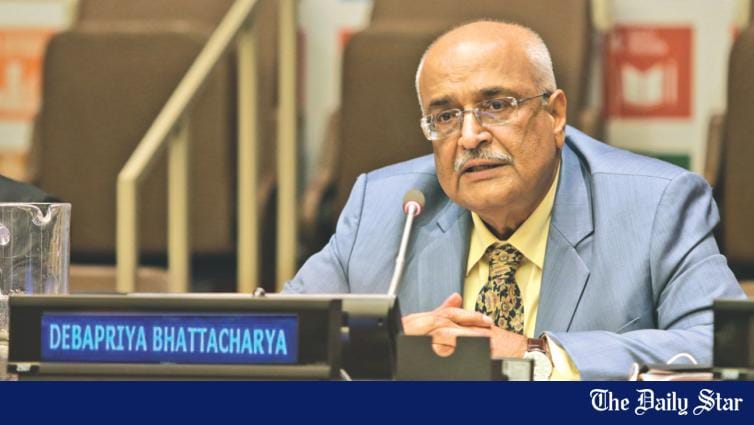
Debapriya Bhattacharya. File photo

The government will prepare a white paper on the state of the economy so that strategic steps can be taken to stabilise the economy, reach the SDGs, and mitigate the challenges after Bangladesh graduates from the LDC grouping.

Economist Debapriya Bhattacharya will be the chief of a panel of economists and eminent citizens, who will come up with the white paper.

Debapriya, convener of the Citizen's Platform for SDGs and a distinguished fellow of the Centre for Policy Dialogue, will choose the members of the committee after talking to the chief adviser.

He said, "It [the white paper] will be a very pertinent transparency exercise to establish the benchmark of the economy. It will inform the future reform measures. I am grateful to the chief adviser that he has recognised its necessity and has taken immediate action."

The panel was given 90 days, starting yesterday, to submit the paper to Chief Adviser Prof Muhammad Yunus, said a statement from his office.

Bangladesh's economy has been suffering for a decade and a half due to mismanagement, corruption, capital flight, and unnecessary projects, said the statement.

"In this situation, the interim government should have a clear picture of the economy and [an outline of] the way out of the challenging situation. So, it decided to form a committee to prepare the white paper," it read.

The focus of the white paper will be on public finance management, inflation, food management, external balance, energy and power, private sector assessment, and employment.

Regarding public finance management, the committee will concentrate on domestic resource collection, public expenditure (public investment, annual development programme, subsidies and debt), and financing of budget deficit.

To get the picture of inflation and food management, it will analyse production, public procurement, and food distribution.

For understanding the challenges of external balance, the committee will focus on export, import, remittance, foreign direct investment, foreign exchange reserves, foreign finance flow and debt.

The panel will also delve into power demand, supply, pricing, costs and purchase agreements to get a clear idea of the problems in the energy and power sector.

Regarding private investment, it will focus on access to credit, electricity, connectivity, and logistics. It will also emphasise on employment at home and overseas, formal and informal wages, and youth employment issues.

The committee members will work for free. The committee will have its office at the Planning Commission and have secretarial support from the General Economic Division of the commission.

The chief adviser's office in the statement said the Hasina-led government left a loan burden of Tk 18,36,000 crore. The government borrowed from internal and external sources to meet its budget deficit without driving hard to raise tax collection.

Although the government's plan was to raise the tax-to-GDP ratio to 14 percent in the current fiscal year, it is now 8 percent. This is an example of economic mismanagement, it said.

In general, people are suffering mainly due to corruption, opportunity of capital flight, and syndication in the market.

Inflation was around 12 percent in July while food inflation was above 14 percent, according to the Bangladesh Bureau of Statistics.

The economy lost its path during the regime of the previous government, it added.​
 

ACC revives investigation into S Alam’s S’pore wealth
It comes year after Star report

The Anti-Corruption Commission has decided to resume its investigation into the alleged money laundering by S Alam Group Chairman Mohammed Saiful Alam alias S Alam.

A recently held meeting at the ACC headquarters decided this, a senior ACC official said.

An investigation by The Daily Star last year found that S Alam built a US $1 billion empire in Singapore.

ACC sources said all relevant records regarding the allegations will be collected, including how much money he borrowed from banks, what assets he might have acquired illegally, and in which sectors the money was invested.

Citing an Appellate Division's ruling, Supreme Court lawyer Khurshid Alam Khan told The Daily Star, "The ACC could have investigated the money laundering allegations against S Alam before. Given the current circumstances, starting the investigation now is a positive step."

On August 13 last year, the ACC began investigating the money laundering allegations against S Alam after The Daily Star on August 4 last year published a report titled "S Alam's Aladdin's Lamp".

The report said S Alam built a business empire in Singapore worth at least $1 billion, although there was no record of him taking any permission from Bangladesh Bank to invest or transfer any funds abroad. It said S Alam bought at least two hotels, two homes, one retail space, and other properties over the last one decade, all the while seeking to remove his name from the paper trails.

On August 6 last year, the High Court directed the authorities to investigate the allegations of him owning businesses abroad without Bangladesh Bank's permission.

On February 5 this year, the Appellate Division of the Supreme Court scrapped the HC suo moto rule that had ordered an investigation.

However, the apex court said the ACC, the CID, and Bangladesh Financial Intelligence Unity (BFIU) can take legal steps on the matter on their own.

On August 18 this year, the ACC received a copy of the Appellate Division's order. Following the order, the ACC reopened the case on Tuesday.​
 

Bangladesh Bank frees Islami Bank from S Alam control
Staff Correspondent 21 August, 2024, 18:19

1724284313011.png


The Bangladesh Bank on Wednesday dissolved the Islami Bank Bangladesh board to free it from the control of S Alam Group and decided to appoint independent directors temporarily to manage the bank.

The government has also seized all shares held by the Chattogram-based S Alam Group and its associates in Islami Bank and plans to sell those shares later to recover the group’s liabilities to the bank.

Bangladesh Bank governor Ahsan H Mansur announced the decision at a press conference, stating that nearly all of Islami Bank’s shares were held by the S Alam Group and its connected individuals.

He said that all the other banks would gradually be freed from S Alam’s control amid the seizure of all of their shares under government control.

The Bangladesh Securities and Exchange Commission has already restricted the transfer or sale of shares in six banks controlled by the group.

On August 20, the commission imposed the restriction on 26 individuals and 56 companies linked to the S Alam Group.

The Bangladesh Financial Intelligence Unit also froze the bank accounts of S Alam and his family members on August 18.

In 2017, S Alam Group took control of Islami Bank, allegedly with the help of a state agency, on the pretext of ousting individuals linked to Jamaat-e-Islami.

The government agency oversaw the whole operation when some individuals were forced to sign documents to facilitate the transfer of the bank’s ownership.

Over the past seven years, the group allegedly took Tk 75,000 crore from the bank under various anonymous names, accounting for half of the bank’s total loans.

Sources revealed that these loans were taken without following standard banking rules by companies linked to S Alam Group chairman Saiful Alam, his wife Farzana Parveen, his son Ahsanul Alam, their relatives, and employees.

Ahsanul Alam is the current chairman of Islami Bank.

Since 2017, S Alam Group, backed by the government, has also gained control of five other banks similarly. These banks are Social Islami Bank, First Security Islami Bank, Union Bank, Global Islami Bank, and Bangladesh Commerce Bank.

On May 7, the BB also handed over the control of the National Bank to individuals connected with the S Alam group.

The BB restructured the board of the bank on August 20 to free it from S Alam control.

The group, with the support of former governors Abdur Rouf Talukder and Fazle Kabir, reportedly withdrew around Tk 2 lakh crore from the banking sector.

Most of these loans were siphoned off and never used for business within the country, BB officials said.

Over 82 per cent of Islami Bank’s shares are held by S Alam Group and its associates, often under anonymous and forced acquisitions.

According to Dhaka Stock Exchange data, Islami Bank has a total of 1.6 billion shares, of which 82 per cent, valued at Tk 5,162 crore at current market rates, were acquired by the group.

Despite banking regulations that prohibit any group from owning more than 10 per cent of a bank’s shares, the central bank had previously not intervened in S Alam Group’s substantial share acquisition.

All of the banks under S Alam’s control are grappling with severe liquidity shortages and are surviving solely on an ‘illegal’ lifeline provided by Bangladesh Bank.

The latest action against the errant group came after Sheikh Hasina resigned as prime minister and fled to India on August 5, amid an unprecedented student-led uprising.

During Wednesday’s press conference, Mansur said that the investigation into the money laundering allegation against S Alam Group might be reopened soon.

He emphasised that no leniency would be shown to those who took loans and failed to repay them, with legal measures being pursued to recover funds.

He also mentioned that weak banks’ boards would be dissolved, as was recently done with National Bank, and the same would be applied to Islami Bank.

Mansur clarified that the government would not take over the operations of these banks.

Instead, independent directors would be temporarily appointed, and any shareholders, excluding S Alam Group, holding more than 2 per cent of shares and deemed capable might join the board in the future.

Regarding the loans taken by S Alam Group, Mansur said that exact amounts, including those obtained under false names, were still being investigated but would be uncovered in time.

Addressing the broader financial scandals in the banking sector, Mansur noted that resolving these issues would take time and could not be accomplished quickly.

He stressed that the central bank’s focus is now on protecting the economy, preventing defaults, and ensuring that Bangladesh’s international transactions remain stable.​
 

ACC begins probe into S Alam money laundering allegation
Staff Correspondent 21 August, 2024, 23:30

1724284648801.png


The Anti-Corruption Commission started an inquiry against S Alam Group chairman Mohammad Saiful Alam over allegations of laundering money to Singapore.

ACC on Tuesday formed a three-member inquiry team led by its money laundering wing deputy director Md Nur-E-Alam to probe the allegations, confirmed a director of the commission.

He said S Alam is accused of laundering $ 1 billion to Singapore and they started the inquiry and were collecting records related to the complaint to facilitate the inquiry.

‘How much money has borrowed by S Alam from banks and in which sector the money was invested -- everything will be investigated along with his illegal assets,’ he added.

There are allegations against S Alam and his wife Farzana Parveen that they invested and laundered money through offshore banking to Singapore.

S Alam Group owner Saiful Alam has built a business empire in Singapore worth about $ 1 billion, although there is no record of taking any permission from Bangladesh Bank to invest or transfer any fund abroad.

The central bank has so far allowed 17 companies to invest outside the country but the business giant is not on that list.

The Chattogram-based S Alam group bought at least two hotels, two homes, one retail space, and other properties in Singapore over the last one decade.

Earlier, on February 4, the Appellate Division of Supreme Court scrapped a High Court suo moto order for inquiring into the reported money laundering and offshore investment of Tk 11 thousand crore by S Alam Group chairman Mohammad Saiful Alam and his wife Farzana Parveen within two months.

A six-judge bench, chaired by chief justice Obaidul Hassan, however, observed that there would be no bar for the ACC and Bangladesh Financial Intelligent Unit for inquiring into the allegation against the couple, if they feel so.

The Appellate Division rebuked the ACC for not to hold inquiry into the allegations against the couple immediately after publication of a report carried out by a English daily on August 4, 2023.

It scrapped the entire High Court ruling and directive issued on August 6, 2023 after taking into cognisance the newspaper report which said that the couple made offshore investment of Tk 11 thousand crore without permission.

The Appellate Division passed the order after disposing of a petition filed by the couple challenging the High Court ruling.

The HC had asked the ACC, BFIU and the Criminal Investigation Department to inquire into the reported allegations and submit the probe report to High Court in two months.​
 

Prof Yunus seeks UK govt’s support to bring back laundered money
UNB
Published :
Aug 21, 2024 21:52
Updated :
Aug 21, 2024 21:52

1724286015711.png


Interim government Chief Adviser Prof Muhammad Ynus has sought support from the British government through its envoy in Dhaka to track and get back the money laundered to the UK allegedly by the people linked to the Sheikh Hasina-led previous government.

“Huge people from the previous regime laundered money. Prof Yunus sought support to track those incidents and bring back the laundered money,” Chief Adviser’s press secretary Shafiqul Alam told reporters on Wednesday referring to Prof Yunus’ discussion with British High Commissioner to Bangladesh Sarah Cooke.

Alam said some of them owned houses in the UK and the questions are how this money went there.

Regarding works ahead to rebuild Bangladesh, Prof Yunus told the British High Commissioner that they have no option but to succeed.

Both sides acknowledged the deep relations between the two countries and the role of British Bangladeshis.

The UK is a longstanding partner and friend of Bangladesh and the two countries share a strong and enduring relationship, solidified by their deep people-to-people links and shared Commonwealth values.

The UK government earlier welcomed the appointment of the interim government in Bangladesh, led by Professor Yunus.

In the meeting, the High Commissioner and Chief Adviser discussed the breadth and depth of the Bangladesh-UK relationship.

They discussed how the UK government can support the interim government, as it charts a new inclusive and democratic future for Bangladesh. Discussions also covered the importance of youth engagement to navigate the challenges that lie ahead.

British High Commissioner Sarah Cooke said as Prime Minister Sir Keir Starmer wrote in his letter to Chief Adviser, the UK government warmly welcomes the appointment of Prof Yunus and the interim government.

“The interim government has the UK’s full support as it works to restore peace and order, ensure accountability and promote national reconciliation. We look forward to working with Professor Yunus and the interim government as they chart a peaceful transition to an inclusive, prosperous and democratic future for Bangladesh.”​
 

Members Online

Latest Posts

Latest Posts