☕ Support Us
[🇧🇩] - In Bangladesh, A Violent 'Student Revolution' is on بنگلہ دیش میں انقلاب | Page 14 | PKDefense

[🇧🇩] In Bangladesh, A Violent 'Student Revolution' is on بنگلہ دیش میں انقلاب

Reply (Scroll)
Press space to scroll through posts
G Bangladesh Defense
[🇧🇩] In Bangladesh, A Violent 'Student Revolution' is on بنگلہ دیش میں انقلاب
334
10K
More threads by Bilal9

Status
Not open for further replies.
DHAKA: Garment factories and banks reopened in Bangladesh Wednesday after authorities eased a curfew imposed to contain deadly clashes sparked by student protests over civil service employment quotas.

Last week's violence killed at least 186 people, according to an AFP count of victims reported by police and hospitals, during some of the worst unrest of Prime Minister Sheikh Hasina's tenure.

Thousands of troops are patrolling cities around the South Asian country to keep order, and most Bangladeshis remain without internet nearly a week after a nationwide shutdown was imposed.

But with calm returning to the streets after several days of unbridled mayhem, the country's economically vital textile factories resumed operations after government clearance.

"We were worried about the future of our company," 40-year-old factory worker Khatun, who gave only one name, told AFP.

Despite the disruption, Khatun said she supported the demands of student protesters to reform government hiring rules and was shocked by last week's violence.

"The government should implement all their demands," she said. "A lot of them were killed. They sacrificed for future generations."

The garment industry generates $50 billion in yearly export revenue for Bangladesh, employing millions of young women to sew clothes for H&M, Zara, Gap and other leading international brands.
View on Watch
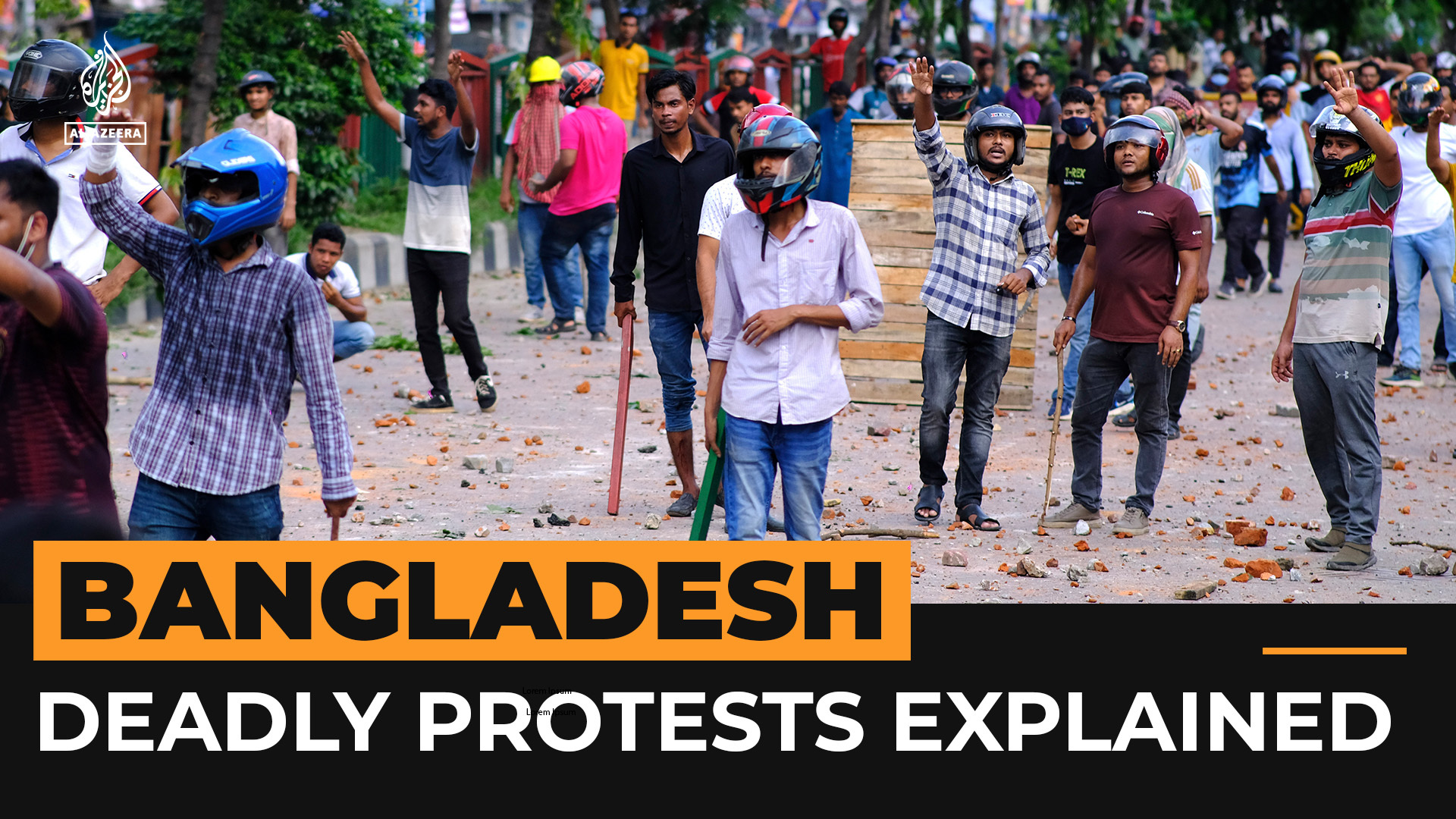
Bangladesh's deadly protests explained
Al Jazeera/Al JazeeraBangladesh's deadly protests explained
2:29
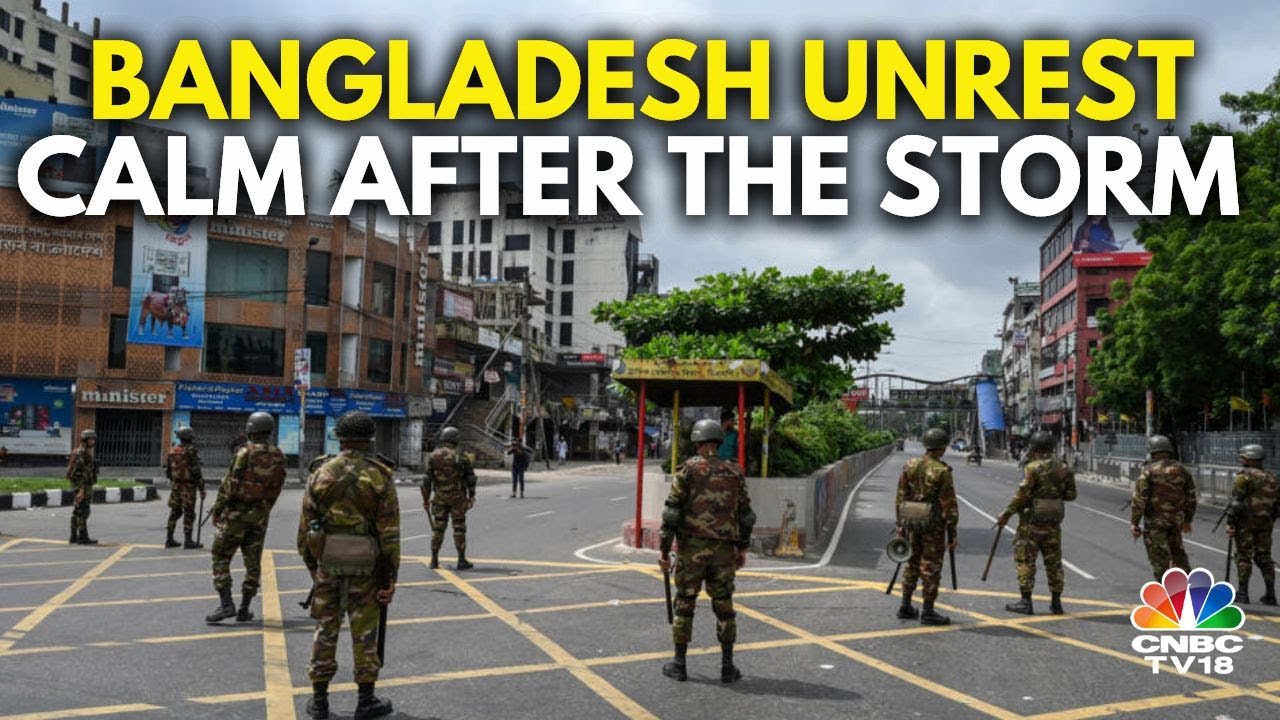
Bangladesh curfew continues after widespread violence | N18G
CNBCTV18/CNBCTV18Bangladesh curfew continues after widespread violence | N18G
3:19
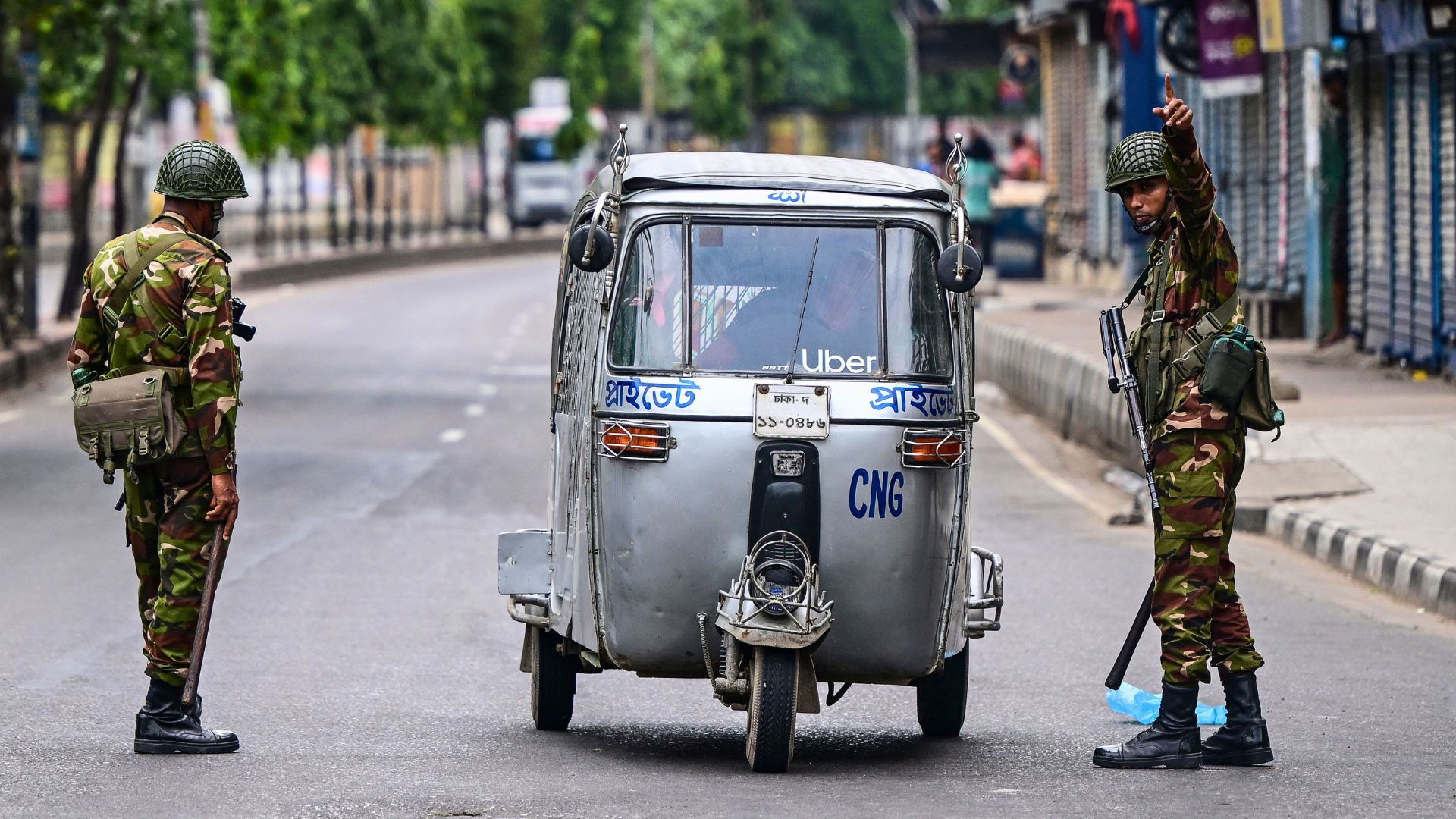
Calm on the streets of Dhaka after plans for a nationwide shutdown are on hold

Internet hasn't been restored in Bangladesh despite apparent calm following deadly protests

A spokesperson for the Bangladesh Garment Manufacturers and Exporters Association told AFP that garment factories had resumed business "across the country".

Hasina's home minister Asaduzzaman Khan agreed to exempt textile workers from an ongoing curfew to allow them to return to work, the peak body's spokesman said.

The curfew was eased Wednesday to allow some commerce to resume but remains in effect for most Bangladeshis for 19 hours each day.

Banks, the stock exchange in the capital Dhaka, and some government offices also opened between 10:00 am and 3:00 pm to match the daily break in the stay-home order, government spokesman Shibli Sadiq told AFP.

'So much blood'

The student group which led this month's protests has suspended demonstrations until at least Friday, with one leader saying they had not wanted reform "at the expense of so much blood".

Police have arrested at least 2,500 people since the violence began last week.

Hasina's government says the stay-home order will be relaxed further as the situation improves.

Broadband internet was being gradually restored on Tuesday evening but mobile internet -- a key communication method for protest organisers -- remained inoperative.

Internet connectivity across Bangladesh was still around 20 percent of normal levels, according to data published by US-based monitor Netblocks.

With around 18 million young people in Bangladesh out of work, according to government figures, the June reintroduction of the quota scheme -- halted since 2018 -- deeply upset graduates facing an acute jobs crisis.

Critics say the quota is used to stack public jobs with loyalists to Hasina's Awami League.

The Supreme Court on Sunday cut the number of reserved jobs but fell short of protesters' demands to scrap the quotas entirely.

Hasina, 76, has ruled the country since 2009 and won her fourth consecutive election in January after a vote without genuine opposition.

Her government is also accused by rights groups of misusing state institutions to entrench its hold on power and stamp out dissent, including by the extrajudicial killing of opposition activists.

 
News Headlines in Bangladesh both Bengali and English | 24 July 2024

TLDR, Curfew lifted in some areas. Broadband access is back but mobile Internet is still not available. Govt. going after "troublemakers" with 2700 arrested. Meanwhile Govt. is assuring security and safety for all students.


Quota protest: Fresh programmes likely tomorrow
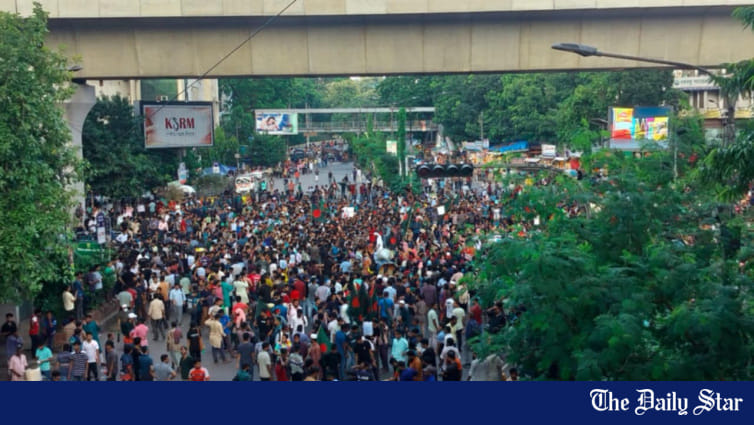
1721865377232.png

Star file photo

The quota reform protesters are likely to announce fresh programmes tomorrow as the 48-hour ultimatum to fulfil their four-point demand ends tomorrow.

The protesters said they would speak before the media after the ultimatum ends.

"Our ultimatum will end tomorrow [Thursday]. After that we will sit together upon assessing the overall situation and brief the media about our stance," Sarjis Alam, a coordinator of "Baishamyabirodhi Chhatra Andolan", the platform that spearheaded the quota reform protest told The Daily Star today.

Earlier on Tuesday, four organisers of the protest, at a press conference, rejected a government circular announcing the new quota allocation in government jobs.

They said the authorities should have held a dialogue with students and other stakeholders before issuing the circular and they would not accept the circular as the final resolution.

At the press conference, Sarjis placed a four-point demand -- ensuring the safety of protest organisers, full restoration of the internet, withdrawal of curfew, reopening of educational institutions and withdrawal of law enforcers from campuses. Issuing a 48-hour ultimatum, they said these are the preconditions of holding talks with the government.​
 

Quota protest: Fresh programmes likely tomorrow
View attachment 7073
Star file photo

The quota reform protesters are likely to announce fresh programmes tomorrow as the 48-hour ultimatum to fulfil their four-point demand ends tomorrow.

The protesters said they would speak before the media after the ultimatum ends.

"Our ultimatum will end tomorrow [Thursday]. After that we will sit together upon assessing the overall situation and brief the media about our stance," Sarjis Alam, a coordinator of "Baishamyabirodhi Chhatra Andolan", the platform that spearheaded the quota reform protest told The Daily Star today.

Earlier on Tuesday, four organisers of the protest, at a press conference, rejected a government circular announcing the new quota allocation in government jobs.

They said the authorities should have held a dialogue with students and other stakeholders before issuing the circular and they would not accept the circular as the final resolution.

At the press conference, Sarjis placed a four-point demand -- ensuring the safety of protest organisers, full restoration of the internet, withdrawal of curfew, reopening of educational institutions and withdrawal of law enforcers from campuses. Issuing a 48-hour ultimatum, they said these are the preconditions of holding talks with the government.​
 

Violence centring quota protest: Four more hurt in earlier clashes die

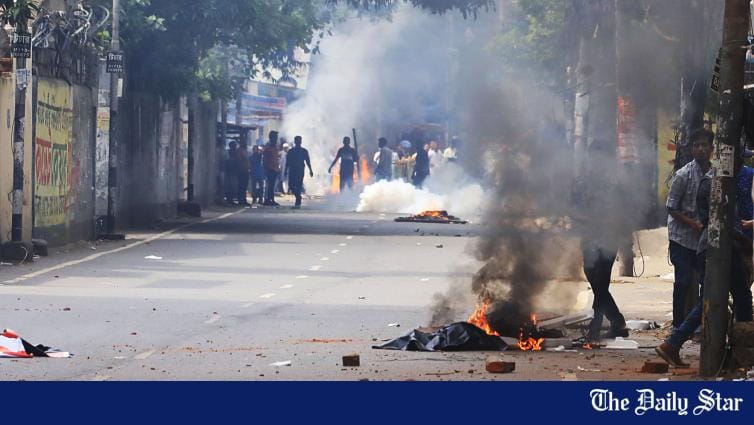
1721865581128.png

Photo: Amaran Hossain

Four more people, including a six-year-old child, who sustained injuries during clashes centring the quota reform movement earlier, died in different hospitals today.

They are Riya Gope, six, of Narayanganj's Nayamati area; Sajidur Rahman Omar, 22, an IT technician in the capital's Demra; and Shahjahan, a salesman in Mohakhali, according to Dhaka Medical College Hospital's death register and the victims' family members.

The other is Tuhin Ahmed, 26, who died in Savar's Enam Medical College Hospital early today.

Riya sustained bullet injuries during a clash on Friday as she, along with others, went to the roof of their four-storey building to see what was happening. She was immediately admitted to DMCH, where she died today, his father Dipak Kumar Gope told The Daily Star.

Sajidur sustained bullet wounds during clashes in Konapara area in Demra on Sunday, while Shahjahan was injured on Friday during a clash at the Mohakhali level-crossing, police and family members said.

Meanwhile, Tuhin Ahmed, 26, was shot during clashes between agitators and law enforcers in Savar on Sunday, reports our Savar correspondent.

Yousuf Ali, the hospital's duty manager, confirmed the death.

With today's count, at least 154 were killed since last Tuesday, when six people were killed in clashes between agitators, law enforcers, and ruling party activists.

At least 30 people died on Thursday, 66 on Friday, 25 on Saturday, 14 on Sunday, six on Monday and three on Tuesday.

The overall death toll from the violence between agitators, law enforcers, Border Guard Bangladesh members and ruling party activists, may be higher as The Daily Star could not reach many hospitals, where dozens of critically injured patients were taken.

Also, many families reportedly collected the bodies of their loved ones from the scene, and this newspaper could not contact those families.

The Daily Star's count of the victims is based solely on hospital sources.​
 

An independent Bangladesh is enough for me

1721865861882.png

VISUAL: Manan Morshed

I am a grandchild of a freedom fighter. My Nana did not fight the Pakistan Army in the battlefront, but as a railway official in 1971, he used train coaches to transport arms and ammunition to freedom fighters. When the Pakistani authorities learnt of his actions, Nana had to spend months as a fugitive, which took a toll on him both mentally and physically. His contribution was recognised by the Bangladesh government. He got promoted after the war, and also received a plot in Dhaka. Though he did not live long enough to build a house there and reside in it, his children, grandchildren and great grandchildren are reaping the benefits of that reward: a place to call our nanabari/dadabari. But, in my opinion, the biggest reward that my cousins and I and our children received, thanks to my Nana and thousand others like him, was Bangladesh—a independent nation, where, I believe, we enjoy much more privilege than our parents did growing up in East Pakistan.

Bangladesh was under Pakistani rule for more than two decades. I don't know how much change my parents witnessed during that time, but in my lifetime, in independent Bangladesh, two decades meant a huge transformation. I will give a tiny example. My earliest memory of travelling to our village in the Narsingdi district in the 80s was crossing a river on a ferry and parking our car at the house of a local influential politician. We had to walk the rest of way to my dadabari on an earthen road. By 2000, there was no need for a ferry to cross the river anymore, and our car could drive right up to the gate of our village home. The serene landscape of green rice fields one could see after crossing the Shitalakkhya Bridge all the way to our village also disappeared gradually, being replaced by numerous factories and mills. In the 80s, poor young men and women from our village would come to Dhaka looking for employment opportunities often as domestic help or for other low-skilled jobs. That changed at the turn of the century, so much so that it became difficult to find even agriculture labourers in our village anymore. That happened largely because of the factories that grew on the outskirts of Dhaka.

Global advancement of technology and economy. But is it not true that, after independence, whatever we produced in this country were spent in the development of this country and not some distance land to the west? And it is us, the post-independent generations, who are the beneficiaries of that development.

At a personal level, I believe the change Bangladesh went through helped me and my cousins attain good education and subsequently get jobs, which may not pay enough to buy a goat worth Tk 15 lakh, but help us get by and put food on our plates at least three times a day. None of us hold a government job. Whether we were talented enough to even try for a government job is a different question. Most of us never actually took the BCS exams or the recruitment tests in Bangladesh Railway. I don't think getting a government job was ever our dream—not mine, at least. Growing up in the 80s and 90s, we were attracted to private jobs because the remuneration was way better than any government job. The only government job that sounded "cool" was that in foreign service and our relatives who worked in that government wing scored the highest marks in their public examinations throughout. Mind you that was a different era and only one or two persons could stand first in the public examinations among thousands of students in the entire country. So foreign service remained an unattainable dream, which was not even worth trying for.

One reason why my cousins and I were able to live a more or less privileged life in independent Bangladesh is our parents' hard work. They, too, had an advantage over others. They were educated, and were able to cultivate that privilege so they never needed to rely on any quota system to get jobs. In fact, three of my four uncles worked in the private sector, and my eldest uncle who worked in a government bank had secured the job before 1971. It can be argued that, unlike my uncles, descendants of many freedom fighters might never have had the privilege of a good education to start with. Mere recognition would not have helped improve their situation. Whatever little the state offered them to make their situation better right after liberation was much-needed. In fact, the state could have done more. The political instability the country went through in the mid-70s and 80s denied many freedom fighters and their heirs their rights to access those state benefits. But did things not change in the 90s? Were the children and grandchildren of freedom fighters not able to use the preferential system in the 90s when the Awami League was in power? That should have helped many, who were deprived before, to change their fate by securing government jobs.

The point I am trying to make is, people have had five decades in independent Bangladesh to make their lives better. During that time, at least two generations must have grown into adulthood, and despite all the corruption and crimes in the country, their lives must have been impacted to some positive extent by the country's economic development. If that did not happen, then it is a total governance failure. It is the failure of all the governments Bangladesh has had that the country's progress only touched a privileged few, created opportunities only for a handful, so much so that many want to rely on preferential treatment rather than on their own merit to attain some kind of job stability in their lives. It is also a failure of our policymakers and industrialists that they could not create enough employment opportunities in the private sector in 53 years so that young people, like their Western counterparts, would aspire for jobs in private enterprises or want to be entrepreneurs themselves.

While I never had to use any preferential treatment as a freedom fighter's grandchild, today I feel if I had to, I would have felt ashamed to use it especially after so many deaths surrounding this issue. Like I said, my Nana's contribution to the Liberation War has given me a country to call home. A 45-year-old like me in Palestine does not have that privilege. How well I use this gift depends on my own capability. For my descendants, the last thing I want is preferential treatment for their ancestors' legacy. They should undoubtedly be proud of and thankful for their ancestors' achievement, but also should have the dignity to make their own names on their own merit.
Tamanna Khan is a member of the editorial team at The Daily Star.​
 

8 unidentified bodies handed over to Anjuman
Nasir Uz Zaman 25 July, 2024, 00:39

The police on Wednesday handed over eight unidentified bodies from Dhaka Medical College Hospital in connection with the quota reform movement to Anjuman Mufidul Islam for burial.

Besides, five more people, critically injured during the movement, died while undergoing treatment at Enam Medical College and Hospital in Savar upazila and at Dhaka Medical College Hospital on Tuesday night and Wednesday taking the death toll to at least 163 in the past nine days across the country.

The five deceased people were identified as Shuvo Shis, 24, and Tuhin Ahmed, 23, who died at Enam Medical, and Riya Gope, 6, Shahjahan, 22, and Sajedur Rahman, 22, at Dhaka Medical.

Shahbagh police constable Salauddin Ahmed Khan confirmed the handover of the unidentified bodies.

All the eight dead bodies handed over were of male persons aged from 25 to 50.

The constable also said that most of the eight people were brought from the Jatrabari area where violent clashes occurred between the protesters and law enforcers in July 18–20.

Autopsy of the bodies were carried out at the hospital mortuary and DNA samples, photographs and other identification evidence of the deceased were saved, he added.

The Anjuman Mufidul Islam charity buries unclaimed dead bodies handed over to it by the police, hospitals and other organisations.

An Anjuman official told New Age that on Wednesday they received nine unclaimed bodies from Dhaka Medical College Hospital—eight from the hospital morgue and one from the hospital's emergency morgue.

The charity on Tuesday collected one unclaimed body from Sir Salimullah Medical College Hospital morgue in the capital, while on Monday received nine unclaimed bodies from the Dhaka Medical College morgue, and two others from the Shaheed Suhrawardy Medical College and Hospital morgue also in Dhaka city, said the official.

The official, however, did not share any information regarding the cause of the death of these people, saying that they did not know.

Dhaka Medical College mortuary assistant Babul claimed that total eight unidentified bodies in connection with quota movement were handed over to Anjuman Mufidul for burial.

'We have no more unidentified body in the morgue now relating to the movement,' Babul said.​
 
Status
Not open for further replies.

Members Online

Latest Posts

Latest Posts