โ˜• Support Us โ˜•
[๐Ÿ‡ฎ๐Ÿ‡ณ] - India's Space Program | Page 2 | PKDefense

[๐Ÿ‡ฎ๐Ÿ‡ณ] India's Space Program

Reply (Scroll)
Press space to scroll through posts
G   Indian Defense
[๐Ÿ‡ฎ๐Ÿ‡ณ] India's Space Program
59
2K
More threads by Saif


Indian space agency achieves satellite docking milestone
REUTERS
Published :
Jan 16, 2025 21:45
Updated :
Jan 16, 2025 21:45

1737072115622.png

A satellite model is placed on a picture of Earth in this illustration taken Nov 25, 2024. REUTERS/Dado Ruvic/Illustration

India became the worldโ€™s fourth nation on Thursday to achieve the feat of space docking, a technological milestone that underscores its ambitions to expand its share of a rapidly growing $400-billion global space market.

Target and Chaser, two satellites of the Indian Space Research Organisation (ISRO) that are each roughly the size of a large refrigerator, successfully latched onto each other at about 9 a.m. (0330 GMT), an agency spokesperson said.

The indigenous technology, crucial for satellite servicing, space station operations, and interplanetary missions, positions India for a key role in commercial and exploratory space efforts.

โ€œIndia has ambitious missions planned and to achieve those, this is an important technology,โ€ astrophysicist Jayant Murthy said.

โ€œVarious missions, like building a space station, need assembly in space, which is not possible without space docking.โ€

ISRO said the two satellites participating in its Space Docking Experiment (SpaDeX), will now be controlled as a single object, with power transfer checks made in the next few days.

The mission had been postponed twice, first because the docking process needed further validation through ground simulations, and then to resolve an issue stemming from excess drift between the satellites.

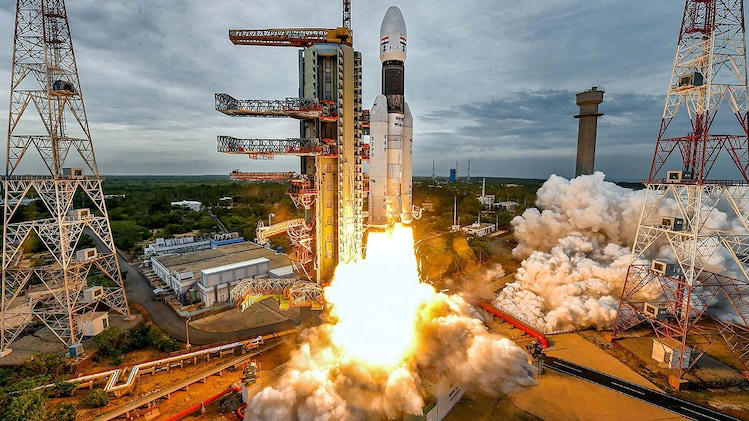
SpaDeX, launched on Dec 30 from Indiaโ€™s main spaceport, deployed the satellites in orbit with an Indian-made rocket.

Among 24 payloads and experiments were eight cowpea seeds, sent to space to study plant growth in microgravity conditions, which germinated within four days of the missionโ€™s launch.

Scientists say this is a critical step demonstrating that food can eventually be grown in space during long missions.

The mission will also demonstrate the transfer of electric power between docked spacecraft, key to applications such as in-space robotics, composite spacecraft control and payload operations after undocking.

Such techniques are essential for missions requiring multiple rocket launches.

Space exploration and commercialisation is a key part of Prime Minister Narendra Modiโ€™s efforts to position India as a global superpower.

The successful SpaDeX mission โ€œis a significant stepping stone for Indiaโ€™s ambitious space missions in the years to come,โ€ Modi said on X.

On Thursday, India approved the setting-up of a third launch pad in the southern state of Andhra Pradesh, to be completed in four years at a cost of 39.85 billion rupees ($461 million), giving a further boost to its space plans.

ISRO is focused on deep-space exploration and enabling private companies to commercialise the sector, with projects ranging from solar studies to orbital astronaut missions and planetary defence, in collaboration with NASA.

With the global commercial space market expected to reach $1 trillion by 2030, India aims to grow its share to $44 billion by 2040, up from $8 billion, or a slice of just 2 percent, now.​
 

Big boost for ISRO's space station, Moon mission: Govt approves construction of third launchpad at Sriharikota​


Big boost for ISRO's space station, Moon mission: Govt approves construction of third launchpad at Sriharikota

Big boost for ISRO's space station, Moon mission: Govt approves construction of third launchpad at Sriharikota
In a major boost for its future deep space missions, the Indian Space Research Organisation (ISRO) is going to get a third launch pad at Sriharikota.

The Union Cabinet on January 16 approved the construction of third launchpad at Satish Dhawan Space Centre in Sriharikota, Andhra Pradesh.


This new facility will serve as a crucial redundancy measure and support ISROโ€™s ambitious future missions, including the New Generation Launch Vehicle (NGLV) programme.

Indiaโ€™s space capabilities will see a major advancement as the NGLV is expected to replace some launch vehicles with enhanced features, including modularity, greater payload capacity, and reusability.

What is NGLV programme

The Next Generation Launch Vehicle (NGLV) is a programme by the ISRO to develop a new rocket to launch satellites, spacecraft and other payloads. The NGLV is also known as the Soorya Rocket.

Whatโ€™s the goal of NGLV programme

The NGLV will help India establish and operate the Bharatiya Antariksh Station. It will help India land a crew on the moon by 2040 apart from launching communication satellites, exploring deep space and transporting cargo.

What are the features of the NGLV


Related video: ISRO to build 3rd rocket launchpad at Sriharikota (WION)
the Sathish Dhawan Space Center at Sriharikota in the state
Loaded: 10.44%

AA1vph8R.img
WION
ISRO to build 3rd rocket launchpad at Sriharikota
Unmute
0

View on WatchView on Watch

  • The NGLV will be 93 meters tall, which is almost 21 meters taller than the Qutab Minar.
  • It will have a robust design that allows for bulk manufacturing and modularity. The
  • booster stages will use semi-cryogenic propulsion, which uses refined kerosene as fuel and liquid oxygen (LOX) as oxidizer.
Whatโ€™s the timeline

The Union Cabinet approved the NGLV programme on September 18, 2024. The development phase is expected to take 96 months (8 years). The NGLV is expected to be completed by 2032.

This programme is likely to help India build a space station by 2035 and achieve a crewed landing mission on the Moon by 2040.

The NGLV aims to strengthen Indiaโ€™s position in the global space industry by lowering the cost of launches by reusing recovered components and offering enhanced capacity for carrying heavier payloads into orbits.

At present India has these active launch vehicles โ€” Polar Satellite Launch Vehicle (PSLV), Geosynchronous Satellite Launch Vehicle (GSLV), Small Satellite Launch Vehicle (SSLV), and Geosynchronous Satellite Launch Vehicle Mk-III (LVM3).


According to the government, the NGLV will have โ€œthree times the payload carrying capacity at 1.5 times the cost compared to LVM3โ€. A sum of Rs 8,239 crore has been allocated by the Centre in its approval for the development of NGLV which will be completed by 2032.
 

Attachments

  • 1737097144535.png
    1737097144535.png
    68 bytes · Views: 31
  • 1737097144550.png
    1737097144550.png
    68 bytes · Views: 25

ISRO successfully demonstrates Vikas engine restart; flags off LVM3 for commercial operations​

1d โ€ข 2 min read

1737349618832.png


For representational purposes

For representational purposes
BENGALURU: The Indian Space Research Organisation (ISRO) on Saturday announced that the team of research scientists had successfully completed the demonstration of the restart of the Vikas Liquid Engines on January 17.

The tests were done at the ISRO Propulsion Complex at Mahendragiri in Tamil Nadu.


Vikas engine is the workhorse engine that powers the liquid stages of all the launch vehicles. The test marks a milestone in the development of technologies for recovery of stages, leading to reusability in future launch vehicles, a press release from ISRO read.

The scientists explained that a series of tests are carried out to validate the restarting of the engine under different conditions. During the test, the engine is on for 60 seconds and then it is shut-off for a period of 120 seconds, after this it is restarted and fired for a seven seconds duration.

โ€œAll engine parameters during the test were found to be normal and as expected. Earlier, a short duration restart test was successfully done in December 2024 with a shut-off time of 42 seconds and firing duration of seven seconds. More tests are planned in the coming days to optimise the performance of the engine under restart conditions,โ€ ISRO added.


ISRO flags off LVM for commercial operations

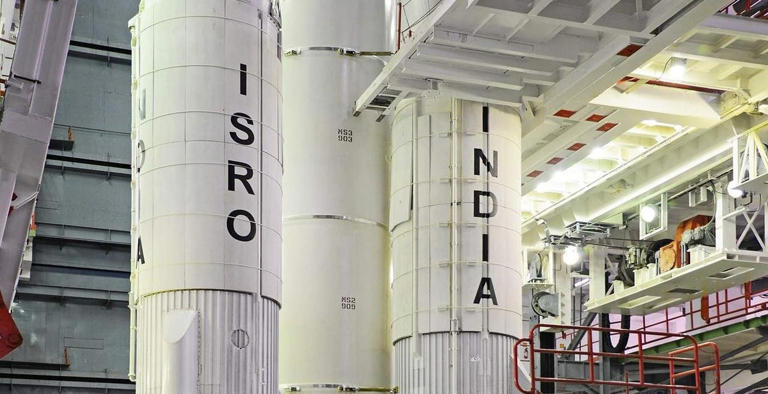
ISRO on Saturday informed that the its Chairman V Narayanan flagged off the launch off the core liquid stage (L110) Launch Vehicle Marck-3 (LVM3) at Sriharikota on January 17. This is the 10th L110 liquid stage integrated at ISROโ€™s Propulsion Complex in Mahendragiri, Tamil Nadu.

It is earmarked for the LVM3 mission under a commercial agreement between NSIL and AST and Science, LLC to launch their BlueBird Block-2 satellite. The L110 was designed and developed by Liquid Propulsion Systems Centre during the development of the LVM3 launch vehicle and is powered by twin Vikas engines with a propellant loading of 110 tones.
 

Isro ships crew module for first uncrewed Gaganyaan mission​

Story by India Today Science Desk
โ€ข 18h โ€ข 1 min read

1737612554300.png


Isro ships crew module for first uncrewed Gaganyaan mission

Isro ships crew module for first uncrewed Gaganyaan mission
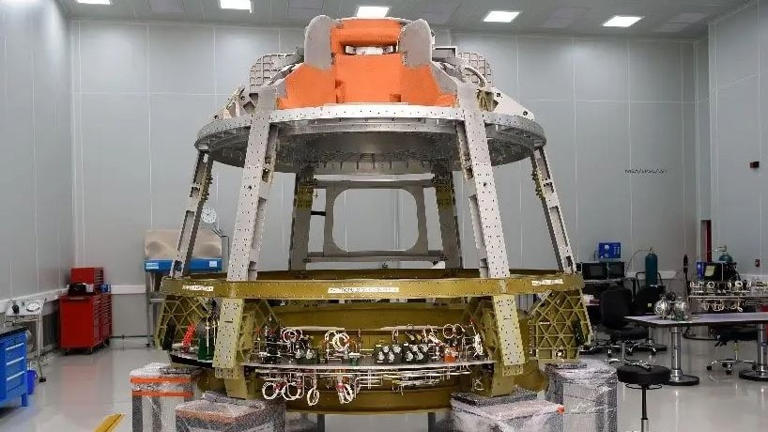
In a milestone, the Indian Space Research Organisation (Isro) has dispatched the Crew Module for the first uncrewed mission of Gaganyaan (G1). The Liquid Propulsion Systems Centre (LPSC) completed the integration of the liquid propulsion system on Tuesday (January 21).

The Crew Module Propulsion System (CMPS) is a bi-propellant based Reaction Control System (RCS) and is meant for precise three-axis control (Pitch, Yaw and Roll) of crew module.

Piramal aranya OC Received


Piramal AranyaPiramal aranya OC Received

Ad

The control will come into play following separation of service module during the descent and re-entry phase until the deployment of parachute-based deceleration system.

This system employs 12 thrusters, each with a 100N capacity, along with a pressurisation system with high pressure gas bottles and the propellant feed system along with the associated fluid control components.

Furthermore, the Crew Module Uprighting System (CMUS) designed by Vikram Sarabhai Space Centre (VSSC) was also integrated to the module at LPSC.

Subsequently, the Crew Module will undergo further integration operations including avionics package assembly, electrical harnessing and checks at Vikram Sarabhai Space Centre (VSSC) before dispatching to Bengaluru's U R Rao Satellite Centre for the final phase of integration of the Orbital Module.

Gaganyaan is poised not only to showcase India's growing expertise in space exploration but also to inspire a new era of scientific innovation.


Related video: Indian Cabinet approves a third launchpad at ISRO's Sriharikotav (WION)
at its Rose Space boat, the Satish Dhawan Space Center


Isro rolls out GSLV-F15 on launch pad with NVS-02: All you need to know​

Story by India Today Science Desk
โ€ข 2h โ€ข 2 min read

1737721457878.png

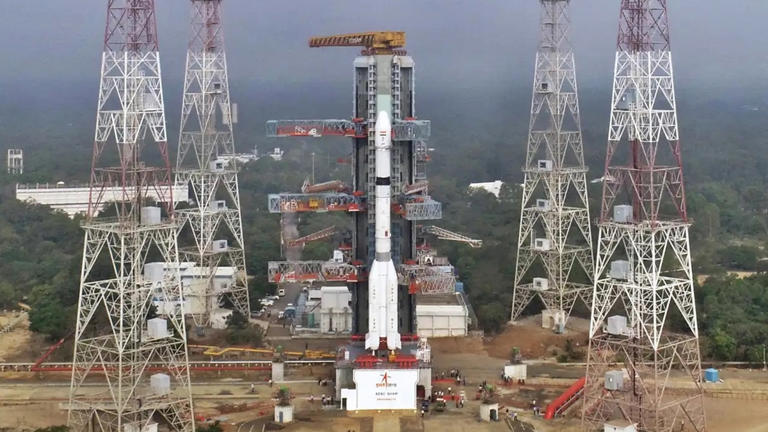
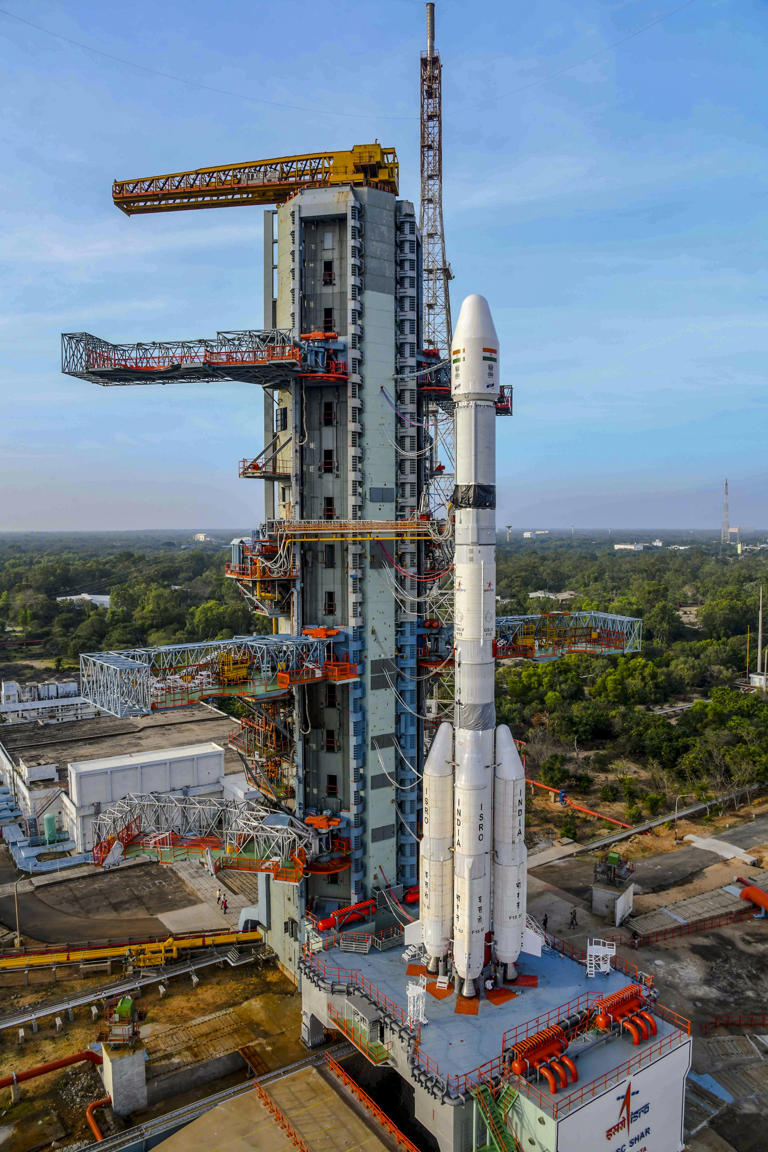
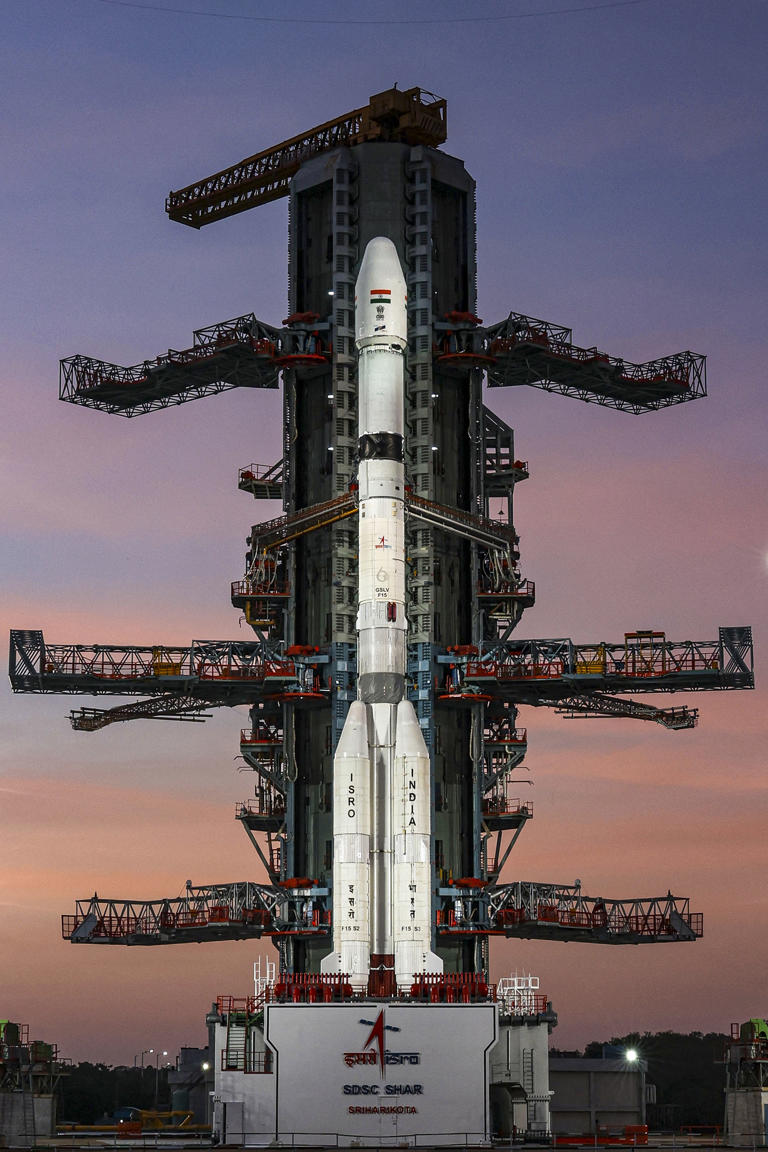
The Indian Space Research Organisation has rolled out the s Geosynchronous Satellite Launch Vehicle (GSLV) on the launchpad with the NVS-02 Satellite, part of the Navigation with Indian Constellation (NavIC).

The GSLV-F15 mission will launch on January 29, 2025 from the Second Launch Pad (SLP) at Satish Dhawan Space Centre, SHAR and place the NVS-02 satellite into a Geosynchronous Transfer Orbit.

This will be the eighth operational flight of the GSLV with an indigenous Cryogenic stage and the 100th Launch from India's Spaceport Sriharikota.


GSLV-F15 on the launch pad. (Photo: Isro)

GSLV-F15 on the launch pad. (Photo: Isro)

WHAT IS NVS-02?

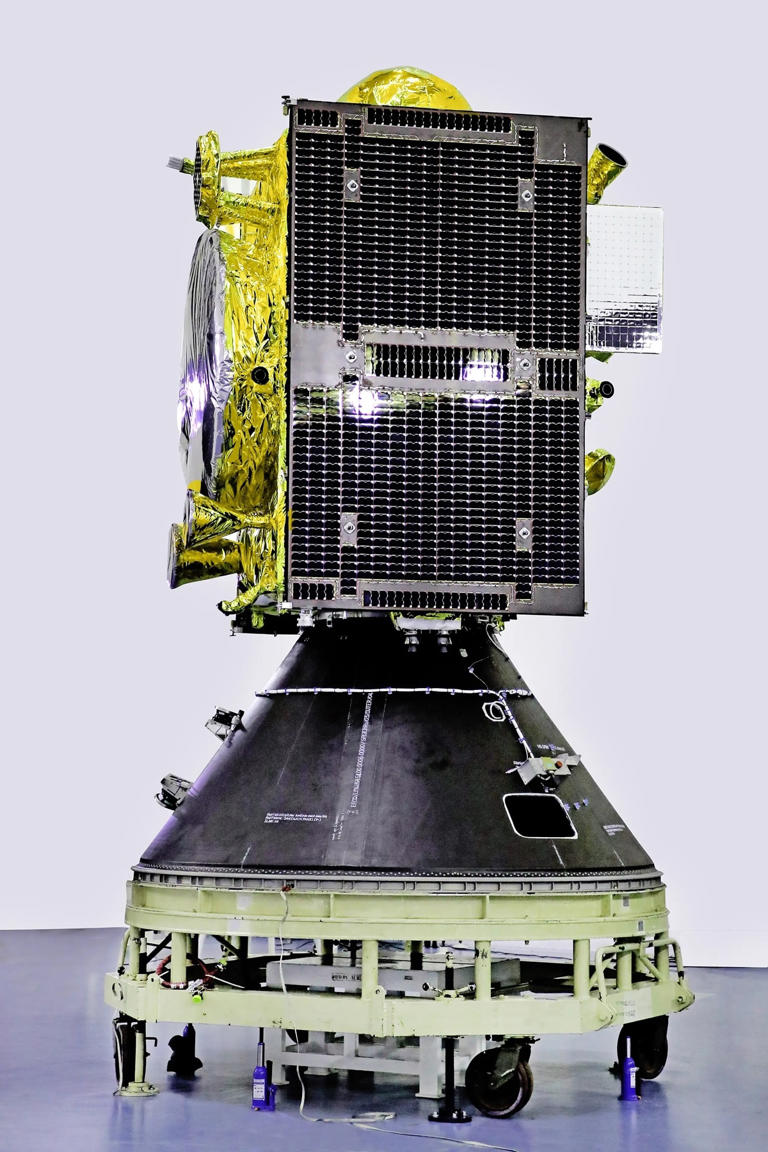
NVS-02 is the second satellite in India's new generation of navigation satellites, part of the Navigation with Indian Constellation (NavIC) system.

NavIC is India's regional satellite navigation system, designed to provide accurate positioning, velocity, and timing information for users in India and nearby regions, up to 1,500 km beyond India.


NVS-02 will help improve NavIC's services, which are used for navigation, precision agriculture, emergency services, fleet management, and even mobile device location services. It carries an advanced navigation payload operating in three frequency bands (L1, L5, and S) to ensure high accuracy. It also has a precise atomic clock called the Rubidium Atomic Frequency Standard (RAFS) for accurate timekeeping.

The satellite will replace an older NavIC satellite, IRNSS-1E, and be positioned at 111.75ยฐE in orbit.


Navigation with Indian Constellation (NavIC) is India's independent regional navigation satellite system. (Photo: Isro)

Navigation with Indian Constellation (NavIC) is India's independent regional navigation satellite system. (Photo: Isro)
Weighing 2,250 kg, NVS-02 has a power capacity of around 3 kW and uses both indigenous and imported atomic clocks for better accuracy. By incorporating new L1 band signals, NVS-02 improves NavIC's compatibility with global navigation systems, ensuring wider adoption and better service.

Ad

The NVS-02 satellite has been meticulously designed, developed, and integrated at the U R Satellite Centre (URSC).

After completing the Assembly and Integrated Testing (AIT), the satellite underwent a rigorous thermal vacuum (thermovac) test during November-December 2024. This test was conducted to verify and validate its design and performance in a simulated space environment, ensuring it could operate effectively under the harsh conditions of space.

In December 2024, the satellite was subjected to a dynamic test to confirm its ability to withstand the mechanical loads anticipated during launch. This critical test validated the structural integrity of the satellite and its readiness for deployment into orbit.


One noteworthy point here is that Indian GSLV Mk2 rocket is considered to be 2000 k.g geo payload capable but same is being used to put 2250 KG in geo unlike China which inflates the payload carrying by comparing Geo payload of other rockets with Leo payload of Chinese rockets. India is all set to double the payload of all her vehicles.
 

GSLV-F15 Rocket Integration Complete, Ready For Launch On Jan 29, ISRO Says​

Story by PTI
โ€ข 12h โ€ข 2 min read

1737953935187.png

Bengaluru, Jan 26 (PTI) ISRO on Sunday said integration of its rocket GSLV-F15 with satellite NVS-02 is complete.

The GSLV-F15 rocket with Indigenous cryogenic stage is ready to be launched on January 29, with the satellite NVS-02 on board, the space agency said. This will be the 100th mission from Satish Dhawan Space Centre in Sriharikota, "GSLV-F15 integration complete! Take a sneak peek at the incredible teamwork behind this mission: Countdown: Less than 3 days to launch! Join us as we unlock new frontiers," the agency said in a post on social media 'X'.

Piramal aranya OC Received


Piramal AranyaPiramal aranya OC Received

Ad

GSLV-F15 will place the NVS-02 satellite into a Geosynchronous Transfer Orbit and the launch will take place from the Second Launch Pad of Satish Dhawan Space Centre, said ISRO.

NVS-01, the first of the second-generation satellites, was launched on board GSLV-F12 on May 29, 2023.

NVS-02, the second satellite in the NVS series, is configured with navigation payload in L1, L5 and S bands in addition to ranging payload in C-band like its predecessor-NVS-01, ISRO said.

According to ISRO, Navigation with Indian Constellation (NavIC) is India's independent regional navigation satellite system designed to provide accurate Position, Velocity and Timing (PVT) service to users in India as well as the region extending about 1,500 km beyond the Indian landmass, which is its primary service area.

NVS-01/02/03/04/05 are envisaged to augment the NavIC base layer constellation with enhanced features for ensuring continuity of services, added ISRO.


Related video: ISRO's SpaDeX Mission: India Docks Satellites In Space, Enters Elite Club Of Nations (WION)


AA1vph8R.img
WION
ISRO's SpaDeX Mission: India Docks Satellites In Space, Enters Elite Club Of Nations
Unmute
0

View on WatchView on Watch

The space agency said NVS-02 uses a combination of indigenous and procured atomic clocks for precise time estimation.

NVS-02 satellite was designed, developed and integrated at the U R Satellite Centre (URSC) with the support of other satellite-based work centres, it added.

GSLV-F15 is the 17th flight of India's Geosynchronous Satellite Launch Vehicle (GSLV) and the 11th flight with the Indigenous Cryo stage, said ISRO . It is also the eighth operational flight of GSLV with an indigenous Cryogenic stage, it added.

(This report has been published as part of the auto-generated syndicate wire feed. Apart from the headline, no editing has been done in the copy by ABP Live.)


Countdown for ISRO's 100th mission begins at Sriharikota​

Story by PTI
โ€ข now โ€ข 2 min read

1738046637138.png


Countdown for ISRO's 100th mission begins at Sriharikota

Countdown for ISRO's 100th mission begins at Sriharikotaยฉ PTI
Sriharikota, (Andhra Pradesh) Jan 28 (PTI) The 27-hour countdown for ISRO's historic 100th mission from this spaceport, launch of a Navigation satellite onboard a GSLV rocket commenced on Tuesday, sources in the space agency said. Also, this would be the first mission for ISRO Chairman V Narayanan, who assumed office on January 13.


Countdown for ISRO's 100th mission begins at Sriharikota

Countdown for ISRO's 100th mission begins at Sriharikotaยฉ PTI
The Geosynchronous Satellite Launch Vehicle (GSLV) with indigenous Cryogenic upper stage in its 17th flight, carrying the navigation satellite NVS-02 is scheduled for lift-off at 6.23 am on January 29 from the second launch pad here.

The navigation satellite is the second in the series of the Navigation with Indian Constellation (NavIC) aimed to provide accurate position, velocity and timing to users in the Indian sub-continent as well as to regions about 1,500 km beyond the Indian land mass.


"The 27.30 hour countdown commenced at 02.53 am on Tuesday," multiple sources told PTI.

The 50.9 metre tall GSLV-F15 follows the GSLV-F12 mission which successfully carried navigation satellite NVS-01, the first of the second generation satellites on May 29, 2023.

NavIC comprises five second generation satellites--NVS-01/02/03/04/05 envisaged to augment NavIC base layer constellation with enhanced features for ensuring continuity of services.

The NVS-02 satellite designed and developed by the U R Satellite Centre weighs about 2,250 kg. It has navigation payload in L1, L5 and S bands in addition to ranging payload in C-band like its predecessor NVS-01.

The key applications the satellite would be used for are terrestrial, aerial and maritime navigation, precision agriculture, fleet management, location based services in mobile devices, orbit determination for satellites, Internet-of-Things (IoT) based applications, emergency and timing services, ISRO said. PTI VIJ SA


Related video: ISRO's SpaDeX Mission: India Docks Satellites In Space, Enters Elite Club Of Nations (WION)
 
Today, it was 100th launch. Total 6 different generation of launch vehicles were made. 548 satellites launch till date weighing 120 tons.

433 foreign satellites launched with 100% success rate weighing over 23 tons.
 

Members Online

Latest Posts

Latest Posts