โ˜• Support Us โ˜•
[๐Ÿ‡ง๐Ÿ‡ฉ] - Save the Rivers/Forests/Hills-----Save the Environment | Page 21 | PKDefense

[๐Ÿ‡ง๐Ÿ‡ฉ] Save the Rivers/Forests/Hills-----Save the Environment

Reply (Scroll)
Press space to scroll through posts
G Bangladesh Defense
[๐Ÿ‡ง๐Ÿ‡ฉ] Save the Rivers/Forests/Hills-----Save the Environment
493
12K
More threads by Saif


Must Buriganga die?
SYED FATTAHUL ALIM
Published :
Nov 18, 2024 21:51
Updated :
Nov 18, 2024 21:52

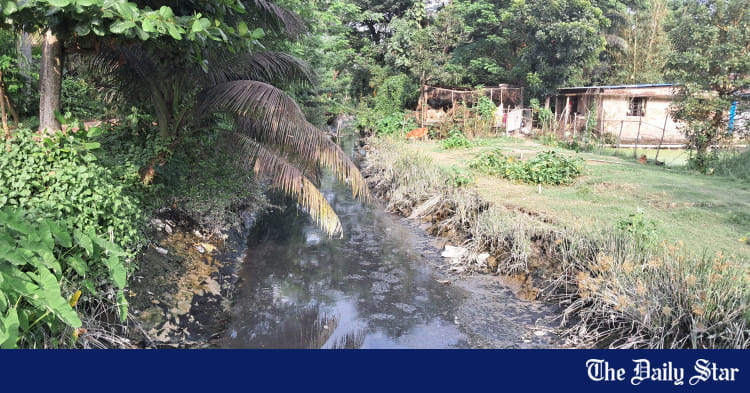
1731977859382.png


The days are not far off when people will talk about Buriganga river in the past tense. There is still a stretch of narrow water body called Buriganga which was 45 kilometres long when the Bangladesh Water Development Board (BWDB) measured it in 2005. But it became shorter by 26 km when BWDB again measured its length in 2011. And this river, now a shadow of its glorious past, is diminishing in length, width and depth every day, thanks to the endless encroachment of its banks by land-grabbers as well as its being the favourite dumping site for Dhaka's industries and sewer system.

But whatever is still left of the river is a dark mass of foul-smelling water where no aquatic life, except perhaps sucker fish, can survive. For the amount of dissolved oxygen in its water goes down to 2 milligrams per litre (mg/L), even 1 mg /L, during lean seasons. But for aquatic life to survive and grow, the concentration of dissolved oxygen (DO) in water should be more than 6.5 to 8 mg/L.

The governments in the past undertook numerous projects to free Buriganga from pollution and encroachers. Five rivers including the Buringanga, namely Turag, Sitalakhya, Balu and Dhaleswari that surround the Dhaka city are equally polluted by wastes from industries and Dhaka's sewerage system. To revitalise these rivers, the previous regime undertook a seven-year programme. To implement the programme through some 29 projects, the government of the time planned to spend USD20 billion. It was estimated at that time that unless urgent action was taken to free those rivers from pollution, the loss to the nation would be as high as USD51 billion in the next 20 years. So, another megaproject styled 'Umbrella Investment Plan-Dhaka Rivers' was in the pipeline. But ultimately it could not see the light of day as the government that conceived it was dislodged from power during August 5's student-mass upheaval. However, there was nothing wrong with the idea of salvaging Buriganga and four other interconnected rivers, which basically constitute Dhaka's lifeline. But given the history of massive corruption involving every megaproject undertaken during the previous regime, one wonders what the cost overruns against those 29 projects under the so-called 'Umbrella Investment Plan-Dhaka Rivers', in short Dhaka Rivers, would finally come to. As experience goes, such big projects created the opportunity for the ruling apparatchiks and their cohorts to loot the state exchequer.

However, the interim government, whose environment, forest and water resources adviser herself is an environment crusader can consider the positive aspects, if any, of the Dhaka Rivers project and see if it could be implemented in a modified form to save Buriganga and its other interlinked rivers.

True, the interim government with its limited mandate may not undertake ambitious projects. In this connection, the environment adviser in one of her interviews with the media said that due to time constraint, her government would rather select a small number of rivers from eight divisions and try to free them, particularly from industrial wastes and encroachers. And those would serve as models for future governments to emulate, she viewed. Cleaning other rivers such as the heavily polluted Buriganga, in her view, is a hugely challenging task as the chromium in the Buringanga water will take a long time to remove.

But will the elected governments of the future take the risk of freeing Buriganga, in particular from pollution and encroachment? For none of the governments in the past could even start the work of saving Buriganga despite no end of promises they made. Why? Because, it is the vested interests who grab the river's banks, set up polluting factories, dockyards, you name it, and the governments are always helpless before their power! Or are they?

So, Buriganga must die.​
 

COP16 on biodiversity: an appraisal
Hasnat Abdul Hye
Published :
Nov 18, 2024 21:41
Updated :
Nov 18, 2024 21:41

1731977982306.png

Convention on Biodiversity (CBD) held in Cali, Colombia from October 21 to November 1 Photo : Agency

The acronym COP (Conference of Parties) has come to be associated with the annual summit on climate change with such automatic conditioned reflex that other conferences held under the same rubric are easily confused with the former or ignored altogether. So, it was not surprising when the sixteenth conference of parties on the Convention on Biodiversity (CBD) held in Cali, Colombia from October 21 to November 1 did not receive much coverage from media. The fact that the majority COP summit (COP29) on climate change to be attended by heads of states and governments was just around the corner (12 November at the Azerbaijani capital Baku) might also be a factor in overwhelming the publicity for COP16 at Cali on biodiversity.

Polemics apart, it has to be admitted that secondary billing given to COP on biodiversity is because of its smaller scope and status in the overall state of the planet compared to COP on climate. By definition, biodiversity is limited to life forms and organisms on earth's terrestrial space. Secondly, its preservation depends greatly on climate and though climate change is caused by factors like denudation of forests, the same cause and effect relation does not exist as it does in respect of biodiversity-climate nexus. But in terms of outcome for human security and welfare, biodiversity's role is significant by any reckoning. That makes a review of COP16 on biodiversity that has just concluded in Cali, Colombia worth going through. To provide a backdrop to the latest development on the Convention on Biodiversity (CBD) it may be helpful to re-visit the genesis and trajectory of this convention.

It began in 1988 in a meeting of an Ad Hoc Working Group of experts convened by the United Nations Environmental Programme (UNEP) to discuss the state of biodiversity in planet earth. The following year the legal text was drafted that addressed the issues of conservation and sustainable use of biological diversity in the world as well as the sharing of benefits arising from their utilisation with sovereign states and local communities. In 1991, an intergovernmental negotiating team was formed to finalise the Convention's text. The following year a Conference for the adoption of Agreed Text of the CBD was held in Nairobi, Kenya. The conclusion from the Conference was documented in the Nairobi Final Act following which the Convention's text was opened for signatures at the UN Conference on Environment and Development in June, 1992, which was also known as 'Rio Earth Summit'. By its closing date on 4 June, 1993, the Convention had received 168 signatures. The Convention on Biodiversity (CBD) entered into force on 23 December, 1993.

The CBD recognised for the first time in international law that the conservation of biodiversity is a 'common concern of humankind' and is an integral part of the development process. The agreement on CBD covers all ecosystems, species and genetic resources in the world. It links traditional conservation efforts to the economic goal of using biological resources sustainably. The Convention sets principles for the fair and equitable sharing of the benefits arising from the use of genetic resources. It also covers the rapidly expanding field of bio-technology through its Cartagena Protocol on Biosafety issues , technology development and transfer, benefit- sharing and biosafety concerns.

As of 2024 the Convention has 196 Parties, including 195 states and the European Union (EU). Among the Parties, the United States (US) has signed but has not yet ratified the Convention, the matter having been blocked in the US Senate.

SUPPLEMENTARY AGREEMENTS: In addition to the main text of the Convention, there are two supplementary agreements signed by the Parties. The first is the Cartagena Protocol on Biosafety to the Convention on Biodiversity, which is an international treaty governing the movements of living modified organisms (LMOS) , resulting from modern biotechnology, from one country to another. The Cartagena Protocol, (named after the historic city of Cartagena, Colombia where the subject was first discussed) also known as the Biosafety Protocol, makes clear that products from new technologies must be based on the human safety principle and allow developing nations to balance public health against economic benefits. It will, for example let countries ban imports of genetically modified organisms if they feel there is not enough scientific evidence that the product is safe and requires exporters to label shipments containing genetically altered commodities. The required number of 50 instruments of ratification/approval by countries was reached in May, 2003 and the Protocol entered into force on 11 September 2003 and had 173 Parties.

THE SECOND SUPPLEMENTARY AGREEMENT TO THE CBD IS THE NAGYOA: Protocol on Access to Genetic Resources and the Fair and Equitable Sharing of Benefits Arising from their Utilisation. The protocol provides a transparent framework for the effective implementation of one of the three objectives of CBD: the fair and equitable sharing of benefits arising from the utilisation of genetic process. The Nagyoa Protocol was adopted in October, 2010, and came into force on October 2014.

Implementation by the Parties to the Convention is achieved using two means: (a) National Biodiversity Strategies and (b) Action Plans. These are the principal instruments for implementing the Convention at the national level. The Convention requires that countries (Parties) prepare a national biodiversity strategy and ensure this strategy is included in planning for activities in all sectors where diversity may be impacted. By 2022, 173 Parties had prepared national strategies and action plans.

STRATEGIC PLAN FOR 2011-2020: At the tenth meeting of the Parties (COP10). held in 2010 in Nagoya, Japan a revised 'Strategic Plan for Biodiversity 2011-2020' was agreed upon. The published document included 20 targets that address each of the five strategic goals that coincided with the launch of Agenda 2030 by UN on Sustainable Goals (SDGs). The Convention on Biodiversity published a technical report mapping and identifying synergy between the 17 SDGs and the 20 Biodiversity target's.

POST-2020 GLOBAL BIODIVERSITY FRAMEWORK: A new plan, known as the post- 2020 Global Biodiversity Framework (GBF), was developed to guide action through 2030s, the final draft of which was released in July, 2021.Reducing agricultural pollution and sharing the benefits of digital sequence information emerged as key points of contention among Parties during preparation of the new framework. The framework was finally adopted in 2022 and had a number of ambitious goals, including commitment to designate at least 30 per cent of global land and sea as protected areas.

MAIN CRITICISMS: The main criticism against CBD has been that its implementation has been weakened due to resistance of Western countries, particularly in respect of the provisions that protect the interests of the global south. As the perpetrators of greater damage to global biodiversity, the industrially developed countries of the north have been reluctant to make concessions with regard to their use of resources that impact on biodiversity. The Convention is also criticised for going soft from its original hard stipulations, making compromises under pressure. The argument to enforce the treaty as a legally binding multilateral instrument with the Conference of Parties reviewing the infractions and non-compliance is gaining ground.

The third criticism is about omissions and commissions. Although commitments have been made to contribute to a fund for protection of fragile ecosystems, contributions by developed countries have been paltry. Finally, in violation of CBD previsions that all life forms are to be covered, examination of reports and of national biodiversity strategies and action plans reveal that this is not happening. For example, the fifth report of the EU makes frequent reference to animals (fish and plants) but does not mention bacteria, fungi etc. As a result no document was assessed as 'good' or 'adequate' while less than 10 per cent reports have been found to be 'nearly adequate' or 'poor'. The rest have been described as deficient, seriously deficient or totally deficient.

SPECIAL AREAS OF INTERVENTION: In the area of marine and coastal biodiversity, CBD's focus is at present to identify Ecologically and Biologically Significant marine areas (EBSAs) in specific ocean locations based on scientific criteria. The goal is to create an internationally legally binding instrument involving area-based planning and decision-making to support conservation and sustainable use of marine biological diversity beyond areas of national jurisdiction. Preserving mangrove and rain forests to protect the various ecosystems under them has received top priority in the activities of CBD. Even desert ecology has received due attention with the common goal of preserving biodiversity. Achievements of goals in all these respects have been frustrated by lack of due diligence by governments in enforcing the restrictions on the use of natural resources like plant and animals. Commercial interests of multinational companies in extracting natural resources have also been a great impediment. The upside is, without CBD and its regular monitoring, damage to biodiversity would have been greater and more alarming.

COP MEETINGS: The meetings of the Parties to the Convention are known as Conference of Parties (COP). The first one (COP1) was held in Nassau, Bahamas in 1994 and the most recent ones were held in Kunming and Montreal (COP15) in 2021-2022 and in Cali, Colombia (COP16) on October-November, 2024.COP on CBD is held on alternate years unlike the COP on climate change that takes place annually.

The agenda of COP16 held in Cali, Colombia from October 21 to November 1 this year featured a variety of topics including discussions on how to implement the Kunming-Montreal (so named because COP15 was divided between the two cities) Global Biodiversity Framework (KMGBF) to achieve the goal of living in harmony with nature by 2050. This involved operationalisation of the monitoring framework, mobilising financial resources, progress on restoration of 30 per cent of degraded land by 2030 and finalising a multilateral mechanism on Access and Benefit Sharing. In pursuance of this agenda, two dozens of global goals were earmarked for monitoring by Parties. But the most important item in the agenda was contribution by Parties, particularly developed countries to the $200 billion dollar fund to help developing countries to take measures for protection of endangered ecosystems and species.

After reaching some key agreements, the final negotiation of COP16 was suspended at the last minute, to be resumed at a future date. The Conference, while answering some major questions, left the main issue of funding open and unresolved. So, the roadmap for preserving endangered ecologies and species, remains to be drawn up in a future that remains uncertain.

The only good news to warm the hearts of environmentalists, particularly indigenous people, was the establishment of a new body dedicated to the Indigenous People's rights, roles, territories and knowledge. The creation of this subsidiary body for indigenous people as a participating entity in future biodiversity talks under the CBD is a recognition of the people who have, for millennia, co-existed with managed and enriched biodiversity through traditional knowledge. By fulfilling a demand of longstanding, COP16 was considered a success even though it failed on the funding issue.

On ocean protection, COP16 saw Parties agreeing to establish a standardised way to identify ocean areas with high ecological value. In doing so, COP16 helped pave the way for the Global Ocean Treaty to be ratified by June, 2025. Additionally, the interconnectedness between biodiversity and climate action was acknowledged, further clearing the way forward for protecting the ecosystems that sustain people and the planet.

Another achievement of COP16 has been a win for people power despite intense lobbying from Big Pharma and Big Agribusiness to pass a resolution requiring corporate bodies to pay for protection of nature. This means companies using genetic resources from nature to make products like medicine, cosmetics, genetic-engineered seeds and scientific research will now have to pay back to protect nature.

CONCLUSIONS: Clearly, in preserving biodiversity funding is of the essence. Public financing from developed countries has to come, sooner rather than later. How this will be achieved has now been left to leaders of developed countries who will be represented at the next meeting of Parties. COP17, to be held in Armenia in 2026, will have a crowded agenda, as usual. But like chickens coming home to roost, the funding issue will be on top.​
 

Must Buriganga die?
SYED FATTAHUL ALIM
Published :
Nov 18, 2024 21:51
Updated :
Nov 18, 2024 21:52

View attachment 10744

The days are not far off when people will talk about Buriganga river in the past tense. There is still a stretch of narrow water body called Buriganga which was 45 kilometres long when the Bangladesh Water Development Board (BWDB) measured it in 2005. But it became shorter by 26 km when BWDB again measured its length in 2011. And this river, now a shadow of its glorious past, is diminishing in length, width and depth every day, thanks to the endless encroachment of its banks by land-grabbers as well as its being the favourite dumping site for Dhaka's industries and sewer system.

But whatever is still left of the river is a dark mass of foul-smelling water where no aquatic life, except perhaps sucker fish, can survive. For the amount of dissolved oxygen in its water goes down to 2 milligrams per litre (mg/L), even 1 mg /L, during lean seasons. But for aquatic life to survive and grow, the concentration of dissolved oxygen (DO) in water should be more than 6.5 to 8 mg/L.

The governments in the past undertook numerous projects to free Buriganga from pollution and encroachers. Five rivers including the Buringanga, namely Turag, Sitalakhya, Balu and Dhaleswari that surround the Dhaka city are equally polluted by wastes from industries and Dhaka's sewerage system. To revitalise these rivers, the previous regime undertook a seven-year programme. To implement the programme through some 29 projects, the government of the time planned to spend USD20 billion. It was estimated at that time that unless urgent action was taken to free those rivers from pollution, the loss to the nation would be as high as USD51 billion in the next 20 years. So, another megaproject styled 'Umbrella Investment Plan-Dhaka Rivers' was in the pipeline. But ultimately it could not see the light of day as the government that conceived it was dislodged from power during August 5's student-mass upheaval. However, there was nothing wrong with the idea of salvaging Buriganga and four other interconnected rivers, which basically constitute Dhaka's lifeline. But given the history of massive corruption involving every megaproject undertaken during the previous regime, one wonders what the cost overruns against those 29 projects under the so-called 'Umbrella Investment Plan-Dhaka Rivers', in short Dhaka Rivers, would finally come to. As experience goes, such big projects created the opportunity for the ruling apparatchiks and their cohorts to loot the state exchequer.

However, the interim government, whose environment, forest and water resources adviser herself is an environment crusader can consider the positive aspects, if any, of the Dhaka Rivers project and see if it could be implemented in a modified form to save Buriganga and its other interlinked rivers.

True, the interim government with its limited mandate may not undertake ambitious projects. In this connection, the environment adviser in one of her interviews with the media said that due to time constraint, her government would rather select a small number of rivers from eight divisions and try to free them, particularly from industrial wastes and encroachers. And those would serve as models for future governments to emulate, she viewed. Cleaning other rivers such as the heavily polluted Buriganga, in her view, is a hugely challenging task as the chromium in the Buringanga water will take a long time to remove.

But will the elected governments of the future take the risk of freeing Buriganga, in particular from pollution and encroachment? For none of the governments in the past could even start the work of saving Buriganga despite no end of promises they made. Why? Because, it is the vested interests who grab the river's banks, set up polluting factories, dockyards, you name it, and the governments are always helpless before their power! Or are they?

So, Buriganga must die.​

In modern times, we chase many fake narratives without addressing the basics. In an enthusiasm to chase blind Industrialization, we lost the connection with basics such as soil, Jungle, water resources preservation. There was a poverty time in subcontinent country where we were struggling to meet our ends. Now we have money. Survival struggling period is over. Now we should start focusing on basic things like expanding green zone, revival of Rivers, reestablishment of water bodies, soil revival etc.
 
Last edited:

COP29: Bangladesh seeks Japanโ€™s support for waste management, emissions reduction
M AZIZUR RAHMAN From Baku, Azerbaijan
Published :
Nov 19, 2024 22:00
Updated :
Nov 19, 2024 22:00

1732065464130.png


Advisor to the Ministry of Environment, Forest, Climate Change, and Water Resources of Bangladesh Syeda Rizwana Hasan held a bilateral meeting with Japan's Minister of Environment Keiichiro Asao at the Delegation Office of Japan during the ongoing World Climate Conference (COP-29).

The discussions emphasised enhanced cooperation by signing a memorandum of understanding on waste management, carbon crediting, climate resilience initiatives, and other avenues for mutual cooperation.

Addressing the meeting, the advisor highlighted waste management as a pressing issue for Bangladesh, contributing approximately 10 per cent (21.04 million tons of CO2-equivalent) of its total greenhouse gas (GHG) emissions. Dhaka alone generates 6,000 tons of waste daily, 73 per cent of which ends up untreated in landfills, exacerbating methane emissions. Bangladesh wants Japan's support in establishing integrated resource recovery facilities, waste-to-energy plants, and sanitary landfills to achieve its 8.0 per cent emission reduction target under the Nationally Determined Contribution (NDC).

The meeting underscored the Joint Crediting Mechanism (JCM) as a crucial tool in advancing low-carbon technologies. Since the signing of the bilateral agreement in 2013, Bangladesh has implemented four JCM projects, including the Southwest transmission grid expansion project, with financial and technical support from Japan and the Asian Development Bank (ADB). Bangladeshi companies benefit from up to 50 per cent subsidies under JCM projects, transferring an equivalent share of carbon credits to Japan. The advisor called for increased private sector participation in future carbon crediting initiatives.

Bangladesh also seeks Japanโ€™s assistance in meeting its updated NDC targets of reducing 15.12 per cent of CO2 emissions by 2030, conditional on international support. Potential collaboration areas include renewable energy, hydrogen energy, e-mobility, and industrial pollution control. Additionally, Bangladeshโ€™s National Adaptation Plan (NAP) 2023-2050, requiring $230 billion for implementation, offers vast investment opportunities for Japanese stakeholders.

Syeda Rizwana Hasan emphasised Japan's expertise in environmental reforms and pollution control as a model for Bangladeshโ€™s ongoing industrialisation and urbanization. Strengthening institutional capacity through innovative solutions and training programmes for the Department of Environment will be pivotal for tackling emerging challenges.

Japan's Minister of Environment Keiichiro Asao remarked Japan is committed to supporting Bangladesh in addressing environmental challenges through innovation and collaboration. "We look forward to scaling up these efforts to meet Bangladeshโ€™s NDC targets and beyond. We are eager to explore new avenues for cooperation. He said all the fields of cooperation will be included in the MoU," he said.

Later, the environment advisor held a meeting with the LDC chair on new collective quantified goals.​
 

Back to square one following futile excavation

1732147334923.png


Within just two years after excavation by Bangladesh Water Development Board, the Leinga canal at Chattogram's Karnaphuli upazila has been filled up once again.

Locals alleged that unplanned work by BWDB has caused around Tk 2 crore of public funds to go to waste in the excavation work.

Even a couple of decades ago, the 12-kilometre-long and 20-45 feet wide canal used to be a vibrant waterbody, with goods-laden boats navigating it. It drained rainwater to Karnaphuli river, and was also an important source of water for irrigation of croplands in adjoining areas, said Siddique Ahmed, 60, a local resident.

Over time, siltation as well as garbage dumped into the canal piled up in it, restricting its natural flow and leaving it on deathbed, causing severe waterlogging in areas along its both banks, especially in monsoon.

Local farmers were also affected as they were no longer getting adequate water from it for irrigation.

To restore its natural flow, the BWDB excavated a 9km stretch of the canal in 2021 under a project and completed the work in 2022.

However, heaps of the excavated earth and garbage were left on both sides of the canal after completion of the excavation work, which eventually got washed down to the canal again during rains, alleged locals and farmers.

"The canal's excavation did not benefit us the waterbody became refilled within a short time," said Ali Ahmed, a farmer from Charlakshya union under the upazila.

Visiting several points of the canal, this correspondent observed that it has shrunken and turned into a narrow ditch across much of its entire stretch.

Some agricultural lands adjacent to the canal were seen in a barren state due to the unavailability of irrigation water, while pollution has turned the canal's water black.

Lokman Hossain, a seasonal vegetable grower of Shikalbaha union, said they used to collect water from the canal during crop cultivation season.

"We no longer get water from the canal as it has become filled up again despite excavation," he added.

Contacted, BWDB officials, however, claimed that the canal got filled up naturally.

Borno Hoque, sub-divisional engineer of BWDB (Anwara sub-division), said, "Protection dams beside the canal could have prevented it from getting filled up so soon, but we had no funds for it at the time of excavation work."

"We will send a proposal for constructing protection dams beside the canal," the BWDB engineer added.​
 

Water crisis along the coast
Sufiya Khatun and Mohibbullah 21 November, 2024, 00:00

1732149712439.png

The only rainwater reservoir serving the residents of this union. | Sufiya Khatun and Mohibbullah

SAFE drinking water insecurity is a global issue, particularly severe in Bangladeshโ€™s coastal regions. Frequent cyclones, storm surges, breached embankments, coastal flooding, and rising salinity levels contribute to the contamination of both groundwater and surface water sources. According to the Bangladesh Environment and Development Society report, 73 per cent of coastal residents lack consistent access to safe drinking water due to rising salinity levels. This crisis becomes particularly severe during the dry season when water scarcity reaches its peak. Despite numerous initiatives aimed at addressing this crisis, millions of coastal residents continue to suffer from safe drinking water insecurity.

In early October, we visited Bagali union in Koyra Upazila, Khulna district, to listen to peopleโ€™s struggles with water insecurity. One of them was Surma Roy (a pseudonym), a 42-year-old mother of three children. She walks five kilometres daily to a deep tubewell, the only functional source of safe drinking water in her area. It takes her four hours to collect two pitchers, each containing 15 to 20 litres, just enough to meet the daily needs of her five-member family. Surmaโ€™s story captures not only the hardships of coastal life but also emphasises the persistent barriers to achieving sustainable water solutions in regions like Koyra.

Reasons for failure: missteps and missed opportunities

OUR observations revealed a familiar list of water systems installed in these villages: solar-powered pond sand filters, traditional PSFs, hand-pumped tube wells, ultra-filtration units, desalination plants, and rooftop rainwater harvesting systems. While some systems worked, many were broken or barely functional. Of the 15 PSFs we saw, only two were in working order; the rest had succumbed to neglect or damage.

One of the clearest reasons for failure echoed across our conversations with locals is poor site selection. In some cases, decisions to build new water plants were not based on proper needs assessments but were influenced by personal connections, with water facilities sometimes set up in areas where people already had access to alternatives. This led to underutilisation of the newly installed facilities while other communities, desperate for safe drinking water, were left empty-handed.

Pricing policies have also posed a major barrier. While technologies like desalination plants and ultra-filtration units offer clean water, they come at a cost too high for most coastal families to bear. In contrast, rainwater harvesting reservoirs can be seasonally affordable, and solar-powered PSFs offer free water, with only community contributions required for maintenance costs. However, the lack of a unified pricing model has created a mismatch between cost and community needs, leaving some water facilities underused while villagers continue to rely on untreated, contaminated sources.

Almost every villager we met expressed frustration over the upkeep of water systems. From solar-powered PSFs to tube wells, the lack of clear maintenance responsibilities has led to frequent equipment breakdowns. In many cases, no sustainable maintenance plans were put in place, meaning there was no regular monitoring, and repairs were delayed or neglected. Surma, like many others, feels the bitter sting of unkept promises, watching as malfunctioning water sources remain unusable while her community waits for help that may never come.

Ironically, thereโ€™s no lack of financial support for these projects. International and local donors, including USAID, the Green Climate Fund, Akij Trust, and the Social Development Foundation, have poured resources into establishing these facilities. Yet, without sustainable funding models for ongoing repairs, this support is quickly exhausted, leaving communities with broken equipment and unmet needs. Water accessibility falls short when projects stop at installation, with no assurance of long-term reliability.

Throughout our field visit, we noticed another recurring issue: a sense of disconnection between the community and the water facilities they were supposed to rely on. Many residents, particularly women, told us they were not consulted about the location or type of water systems being installed. As a result, they often donโ€™t feel ownership or have the knowledge to maintain these systems when they break down. Although solar-powered PSFs, for instance, have shown potential, manually operated PSFs often break down because local people lack the skills to repair them.

Future steps in building resilient water solutions

TO ENSURE that communities like Bagali Union can secure safe drinking water in the long term, a different approach is needed: one that recognises the lessons learnt from these missteps. First, local community involvement must be ensured in every project. Residents should be engaged in planning, implementation, and, most importantly, the maintenance of water systems. Involving communities fosters ownership and empowers locals to address technical problems as they arise.

Second, any effective water solution must be built to withstand the environmental conditions in coastal Bangladesh. Rainwater harvesting systems and solar-powered filtration units can be scaled in areas where traditional water sources fail. These solutions are simple yet powerful, as they align with local resources and skill levels.

Water financing models also need restructuring to ensure that these projects remain sustainable. Local governments, NGOs, and the private sector could collaborate to provide maintenance funds, community-managed accounts, or subsidies for low-income households. If support from international support could extend beyond initial installation, funding ongoing maintenance, coastal communities might finally experience a steady supply of safe water.

Lastly, water resource management must reflect the lives of those it intends to serve. Gender disparities, for example, place a disproportionate burden on women like Surma, who shoulder the responsibility of collecting water. Addressing the needs of all community members will ensure systems are inclusive and can support all residents equitably.

Despite years of water initiatives, the story in Bagali Union reveals that without local involvement, climate-resilient solutions, and sustainable funding, families continue to struggle. The vision of safe drinking water for all in coastal Bangladesh remains within reach if we can learn from past failures and commit to a holistic, community-centred approach.

Sufiya Khatun is pursuing her MSc in water resources development at the Institute of Water and Flood Management, Bangladesh University of Engineering and Technology. Mohibbullah is an environmental economist and is working at Innovision Consulting. Both are from the coastal town of Koyra.​
 

Rich nations urged to commit up to $900b at climate talks
Agence France-Presse . Baku, Azerbaijan 21 November, 2024, 00:16

Negotiators at deadlocked UN climate talks said Wednesday that rich countries have been urged to commit as much as $900 billion per year to help poorer nations take action against global warming.

With two days left at the COP29 conference in Azerbaijan, countries are scrambling to bridge their differences over money seen as crucial for the world to curb planet-heating emissions.

Developing nations, which are least responsible for global emissions, say rich historic polluters have a duty to help pay for their green transitions and the devastating impacts of climate change.

While developed nations have yet to put any figures on the table, some developing countries have called for $1.3 trillion in annual funds.

Rich countries, which are facing tighter budgets and political pressures back home, insist that any commitment must also include loans and private money.

They also want countries such as China and Saudi Arabia, which have become wealthy but are still listed as developing nations, to contribute to climate finance.

Australian climate minister Chris Bowen, one of two envoys mediating the finance negotiations, said three different figures were suggested for the money that would come from the budgets of developed nations: $440 billion, $600 billion and $900 billion.

โ€˜Many parties told us they need to see certain building blocks in place before they can put forward their suggested number,โ€™ Bowen told COP29 delegates.

Delegates from several countries told AFP the figures were not proposed by developed nations.

Bowen said some countries had drawn a โ€˜red lineโ€™ over the type of money, insisting it come โ€˜from a wide range of sources and instrumentsโ€™.

Boliviaโ€™s chief negotiator, Diego Pacheco, said there was a โ€˜steadily receding hope of getting an ambitiousโ€™ deal on climate finance.

โ€˜We are also hearing in the corridors figures of 200 billion being offered by our partnersโ€™ on climate finance which would also include contributions from multilateral development banks, Pacheco said.

Buried in debt, developing nations insist that any deal should not include more loans.

โ€˜Only 200 billion,โ€™ he told the conference. โ€˜This is unfathomable, we cannot accept this.โ€™

The lead negotiator of COP29 hosts Azerbaijan, Yalchin Rafiyev, urged countries to โ€˜pick up the paceโ€™ of negotiations and said a new draft deal would be released at around midnight on Wednesday.

โ€˜Let us embrace the spirit of collaboration, compromise and determination to ensure that we leave this conference with outcomes that make a real difference,โ€™ he said.​
 

โ€˜Shockingly insufficientโ€™
Says Adviser Rizwana as COP29 draft deal proposes USD 250 billion a year for climate finance

1732321656500.png

Photo: AFP

Syeda Rizwana Hasan, adviser to the Ministry of Environment, today criticised the proposed $250 billion annual climate aid to poorer countries at the COP29 in Azerbaijan as "shockingly insufficient."

Wealthy nations today offered the money to help poorer nations hit hardest by global warming but faced immediate calls from several groups of nations to give more as UN climate negotiations extended into overtime.

She also expressed her profound disappointment with the latest text on the New Collective Quantified Goal (NCQG) for climate finance, published by the COP29 presidency.

In her statement, she criticised the text as a "very disappointing package," noting its failure to meet the critical needs of Least Developed Countries (LDCs) and Small Island Developing States (SIDS).

"The proposed decision to allocate $250 billion per year for all developing countries is shockingly insufficient," she said, emphasising that the amount is neither provisioned nor designated as grants.

Furthermore, the text fails to allocate any dedicated funds to the most vulnerable 45 LDCs.

The adviser highlighted the inadequacy of the COP29 outcomes in addressing climate finance challenges, despite this conference being explicitly focused on the issue.

"The package has failed to provide the minimum required justification for an NCQG that should uplift the most vulnerable nations. It offers nothing concrete for LDCs and SIDS, leaving them exposed to escalating climate risks," she said.

Rizwana urged LDCs to resist this package, asserting that it "will make little difference in reality" without substantive revisions. She called on all stakeholders to advocate for a more ambitious, fair, and actionable climate finance framework that prioritises the needs of the world's most vulnerable communities.​
 

Climate finance: COP29 draft proposes $250b a year

1732322634932.png

Photo: AFP Activists hold a silent protest inside the COP29 venue to demand that rich nations provide climate finance to developing countries, during the United Nations Climate Change Conference (COP29) in Baku on November 16, 2024.

A new draft deal at UN climate talks today proposes that rich nations commit $250 billion a year to help poorer nations combat global warming in an 11th-hour bid to break the deadlocked negotiations.

African countries and climate activists quickly denounced the figure as "unacceptable" and inadequate to meet the realities of a rapidly warming world, but wealthy nations including the United States have insisted that massive packages are not politically realistic.

With the gathering scheduled to end later today, delegates from nearly 200 nations had eagerly awaited COP29 hosts Azerbaijan's new proposal after two weeks of fraught bargaining.

The text sets an ambitious overall target to raise at least $1.3 trillion per year by 2035 from not only the public money but also the private sector.

It is the first time concrete numbers were formally proposed at talks dominated by divisions over how to increase assistance for developing nations to cut emissions and adapt to climate change.

Developing countries were seeking a significant boost in the existing pledge that commits rich nations to $100 billion a year in climate finance.

"The proposed target to mobilise $250 billion per year by 2035 is totally unacceptable and inadequate to delivering the Paris Agreement," said Ali Mohamed, chairman of the African Group of Negotiators.

He said it would "lead to unacceptable loss of life in Africa and around the world, and imperils the future of our world."

"The $250 billion target is not enough -- not big enough, not fast enough, not good enough," said Friederike Roder from activist group Global Citizen.

"Inadequate, divorced from the reality of climate impacts and outrageously below the needs of developing countries," said Jasper Inventor from Greenpeace.

But the US, which President-elect Donald Trump is expected to pull out of climate diplomacy, signalled it was not looking to negotiate a higher figure.

"It has been a significant lift over the past decade to meet the prior, smaller goal. $250 billion will require even more ambition and extraordinary reach," said a senior US official, whose team in Baku comes from outgoing President Joe Biden's administration.

COP29 host Azerbaijan said the $250 billion reflected the submissions made by rich nations during the negotiations.

Azerbaijan said it would keep working on "final adjustments" on outstanding issues.

An influential negotiation bloc of 134 developing nations including China had pushed for at least $500 billion from developed countries.

But major contributors such as the European Union have said that private-sector money inevitably must play a part.

The EU also wanted newly wealthy emerging economies like China, the world's largest emitter, to contribute to the overall goal.

Azerbaijan, an authoritarian state that relies on oil and gas exports, has been accused of lacking the experience and bandwidth to steer such large and complex negotiations.

"This is the worst COP in recent memory," Mohamed Adow, speaking for the Climate Action Network, said at a press conference before the text's release, adding that "no deal is better than a bad deal" for developing countries.

Sindra Sharma from the Pacific Islands Climate Action Network, an activist coalition, expressed "a complete sense of frustration" at the talks.

"I've never seen a presidency like this, I've never seen a process like this," she said.

The EU had also called for stronger leadership from Azerbaijan, whose leader, Ilham Aliyev, opened the conference by railing against Western nations and hailing fossil fuels as a "gift of God".

Apart from splits over money, many nations fear the climate deal in negotiation does not reflect the urgency on phasing out coal, oil and gas -- the main drivers of global warming.

Last year's COP28 summit in Dubai made a landmark call on the world to transition away from fossil fuels after long negotiations in Dubai.

But a Saudi official speaking on behalf of the Arab Group said the bloc would "not accept any text that targets any specific sectors, including fossil fuel" in Baku.

German Foreign Minister Annalena Baerbock singled out Saudi Arabia as she said it was "essential" to keep last year's call on fossil fuels.

"Apparently some had a different goal here, and that is turning back the clock," she told reporters.

But European countries, like the US, have also seen a shift in political mood with a backlash against foreign aid and the green agenda.

The annual UN-led climate talks come on what is already poised to be the hottest year in history and as disasters rise around the world.

Just since the start of COP29 on November 11, deadly storms have battered the Philippines and Honduras, while Ecuador has declared a national emergency due to drought and forest fires and Spain has been reeling after historic floods.​
 

COP 29: BD seeks EU support for US$ 200b to LDCs
BSS
Published :
Nov 22, 2024 17:27
Updated :
Nov 22, 2024 17:27

1732326097670.png


Bangladesh has urged the European Union (EU) to support a proposal for allocating US$ 200 billion to the least developed countries (LDCs) and the most climate-vulnerable countries so that these nations can effectively respond to the challenges of the climate crisis.

Bangladesh made the call at a bilateral meeting held today between the ministers of LDCs and the EU on the final outcomes of COP-29 in Baku, Azerbaijan, according to a message received.

The meeting emphasised the need for collaboration on unresolved issues to achieve a balanced and equitable outcome for all parties.

In the meeting, the Bangladesh delegation highlighted that โ€œmany issues remain unresolved," urging both groups to work together to secure a meaningful and inclusive deal for COP29.

During the meeting, the LDC ministers shared their key positions, emphasising on urgent need for financial and technical support to address the adverse impacts of climate change.

The EU ministers acknowledged the concerns raised by the LDCs and reaffirmed their commitment to address climate vulnerabilities to foster sustainable development.

They discussed crucial progress in the negotiations, such as climate finance, adaptation, mitigation, and the global stocktaking process.

The meeting marked an essential step in ensuring that the voices of the most vulnerable countries are heard and acted upon in the final negotiations of COP-29.​
 

Members Online

No members online now.

Latest Posts

Latest Posts